


Daily 10 am to 7 pm
Daily 10 am to 7 pm

Expert Insights on Jewelry, Diamonds, Luxury Watches & Gold
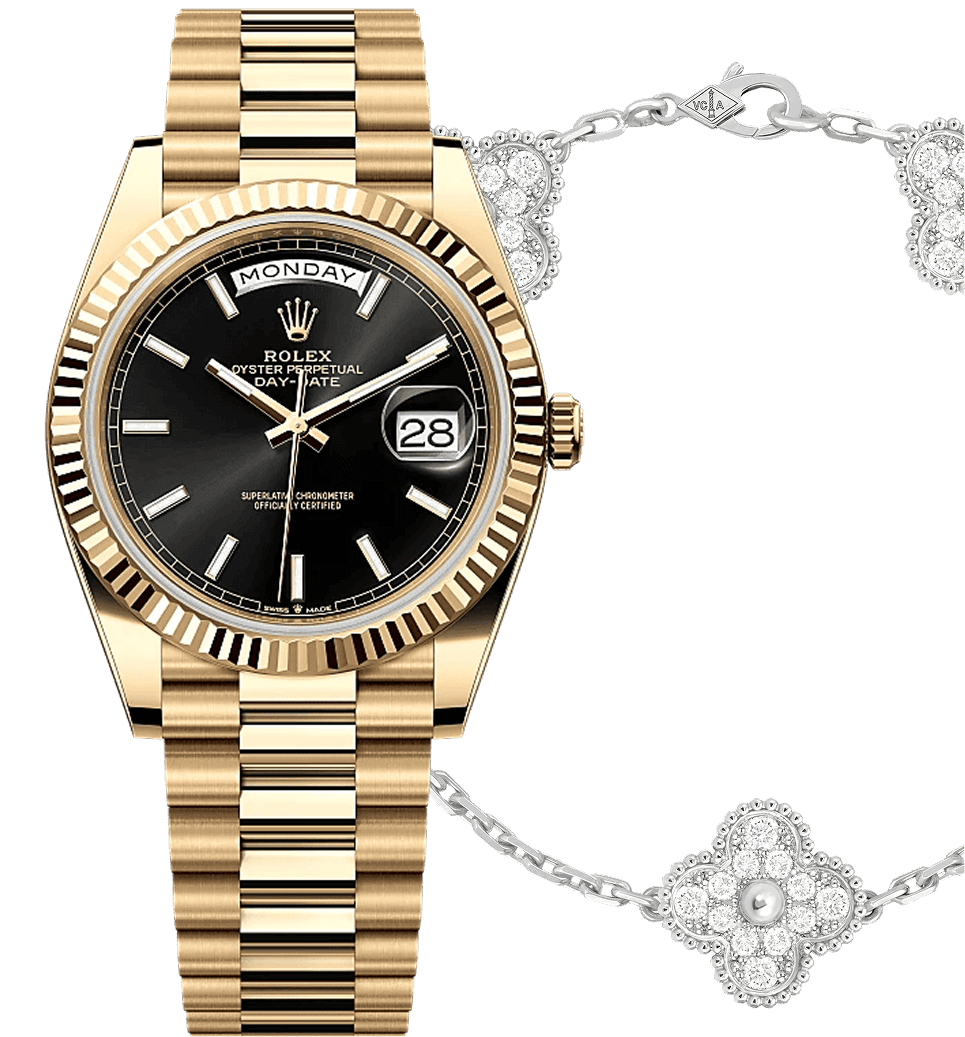
Understanding what you own is the first step toward understanding its value.
LuxeBrokers Insights brings together practical, expert-led articles about fine jewelry, diamonds, Rolex and other luxury watches, gold, designer pieces, appraisals, and the factors that influence resale value.
Whether you are researching an inherited piece, trying to understand a diamond certificate, comparing Rolex values, or learning how gold is priced, our articles are designed to help you make a more informed decision before taking the next step.
Featured Guides
Start with our in-depth guides covering some of the most common questions owners ask when evaluating diamonds, watches, and gold.

Diamond Selling Guide
Understanding a diamond's potential resale value starts with its individual characteristics. Carat weight, cut, color, clarity, shape, certification, condition, and current market demand can all influence how a diamond is evaluated.
Rolex Selling Guide
Two Rolex watches from the same model family can have very different secondary-market values. Reference, configuration, age, condition, originality, box and papers, service history, and current demand may all matter.
Gold Price in Los Angeles
Gold prices change with the market, which means the value of gold jewelry, coins, bars, and bullion can also change over time.
Gold Karat Guide
Gold purity is one of the fundamental factors behind gold value. Our guide explains what 10K, 14K, 18K, 22K, and 24K mean, how fineness markings such as 585 and 750 relate to purity, and why two gold items of the same weight can still have different values.
Jewelry & Estate Jewelry
Fine jewelry can derive value from several different sources.
Precious metal content is only one part of the picture. Diamonds and gemstones, craftsmanship, designer signatures, age, provenance, condition, rarity, and secondary-market demand can all affect how an individual piece is viewed.
This section of LuxeBrokers Insights explores questions such as how to recognize potentially valuable jewelry, what happens when jewelry is inherited, how appraisal value differs from resale value, and what owners should understand before deciding what to do with an estate or personal collection.
Precious metal content is only one part of the picture. Diamonds and gemstones, craftsmanship, designer signatures, age, provenance, condition, rarity, and secondary-market demand can all affect how an individual piece is viewed.
This section of LuxeBrokers Insights explores questions such as how to recognize potentially valuable jewelry, what happens when jewelry is inherited, how appraisal value differs from resale value, and what owners should understand before deciding what to do with an estate or personal collection.
Topics include:
- Understanding jewelry resale value
- Jewelry appraisals
- Inherited and estate jewelry
- Identifying hallmarks and maker signatures
- Designer and signed jewelry
- Evaluating jewelry before selling
- Comparing different selling options
For information about items we evaluate, see our fine jewelry, estate jewelry, and designer jewelry resources.
Diamonds & Gemstones
Diamond value is determined by a combination of measurable characteristics and market conditions.
The traditional 4Cs — carat, cut, color, and clarity — remain important, but they are not the only factors relevant to resale. Shape, certification, fluorescence, whether a diamond is natural or lab-grown, condition, mounting, and current buyer demand may also affect its market position.
Our diamond articles examine these factors in greater detail and answer questions that often arise before an appraisal.
The traditional 4Cs — carat, cut, color, and clarity — remain important, but they are not the only factors relevant to resale. Shape, certification, fluorescence, whether a diamond is natural or lab-grown, condition, mounting, and current buyer demand may also affect its market position.
Our diamond articles examine these factors in greater detail and answer questions that often arise before an appraisal.
Topics include:
- What determines diamond resale value
- Certified versus uncertified diamonds
- GIA and other grading reports
- Selling a diamond without paperwork
- Loose versus mounted diamonds
- Diamond rings and settings
- Natural and lab-grown diamonds
- Understanding diamond appraisal values
Start with our Diamond Selling Guide for a broader overview.
Luxury Watches & Rolex
The luxury watch market is highly model-specific.
Brand alone does not determine value. Reference number, configuration, production period, dial, bezel, bracelet, condition, originality, service history, box and papers, rarity, and current collector demand can all affect a watch's secondary-market value.
This section explores Rolex and other established luxury watch brands from the perspective of valuation, condition, authenticity, documentation, and market demand.
Brand alone does not determine value. Reference number, configuration, production period, dial, bezel, bracelet, condition, originality, service history, box and papers, rarity, and current collector demand can all affect a watch's secondary-market value.
This section explores Rolex and other established luxury watch brands from the perspective of valuation, condition, authenticity, documentation, and market demand.
Topics include:
- Rolex appraisal and resale value
- Model and reference identification
- Box and papers
- Watch condition and originality
- Servicing before an evaluation
- Polishing and refinishing
- Vintage versus modern watches
- Secondary-market demand
- Luxury watch authentication
For an introduction, read our Rolex Selling Guide.
Gold & Precious Metals
Gold is traded as a commodity, but not every gold item should be evaluated in exactly the same way.
Purity, weight, and current gold price provide a starting point. However, jewelry, collectible coins, bullion, designer pieces, and items containing diamonds or gemstones may require additional consideration.
Our gold and precious-metal articles explain the terminology, calculations, and market factors behind valuation.
Purity, weight, and current gold price provide a starting point. However, jewelry, collectible coins, bullion, designer pieces, and items containing diamonds or gemstones may require additional consideration.
Our gold and precious-metal articles explain the terminology, calculations, and market factors behind valuation.
Topics include:
- Gold purity and karat
- Fineness markings
- Spot price
- Pure gold content
- Melt value
- Jewelry resale value
- Gold coins and bullion
- Designer premiums
- Gold testing and weighing
Learn the fundamentals in our Gold Karat Guide and follow current pricing context through our Los Angeles Gold Price Guide.
Appraisals & Resale Value
One of the most common sources of confusion when evaluating valuables is the word “value” itself.
Retail value, insurance replacement value, appraisal value, market value, melt value, and resale value are not necessarily the same thing.
An appraisal prepared for insurance purposes may answer a very different question from an evaluation focused on what an item could realistically sell for in the current secondary market.
Our valuation articles explain how different forms of value work and why factors such as condition, authenticity, documentation, brand, materials, rarity, and current market demand can lead to very different numbers for apparently similar items.
Retail value, insurance replacement value, appraisal value, market value, melt value, and resale value are not necessarily the same thing.
An appraisal prepared for insurance purposes may answer a very different question from an evaluation focused on what an item could realistically sell for in the current secondary market.
Our valuation articles explain how different forms of value work and why factors such as condition, authenticity, documentation, brand, materials, rarity, and current market demand can lead to very different numbers for apparently similar items.
Topics include:
- Appraisal value versus resale value
- Insurance replacement value
- Current market value
- Secondary-market demand
- How condition affects value
- Documentation and provenance
- How buyers evaluate different categories
- When a professional appraisal may be useful
Learn Before You Decide
Valuable items are rarely interchangeable.
Two diamond rings with the same carat weight can differ significantly in quality. Two Rolex watches with similar appearances may have different references, production periods, conditions, or levels of completeness. Two 18K gold bracelets may contain similar amounts of gold while having completely different resale markets because one is a signed designer piece.
That is why LuxeBrokers Insights focuses on item-specific factors rather than generic price promises.
Our goal is to explain the details that matter so you can better understand your jewelry, diamond, watch, gold, or collection before deciding what to do next.
New articles are added as we expand our coverage of valuation, authentication, resale markets, luxury brands, and the questions owners most often ask.
Two diamond rings with the same carat weight can differ significantly in quality. Two Rolex watches with similar appearances may have different references, production periods, conditions, or levels of completeness. Two 18K gold bracelets may contain similar amounts of gold while having completely different resale markets because one is a signed designer piece.
That is why LuxeBrokers Insights focuses on item-specific factors rather than generic price promises.
Our goal is to explain the details that matter so you can better understand your jewelry, diamond, watch, gold, or collection before deciding what to do next.
New articles are added as we expand our coverage of valuation, authentication, resale markets, luxury brands, and the questions owners most often ask.