


Daily 10 am to 7 pm
Daily 10 am to 7 pm

Should You Polish or Service a Rolex Before Selling It?
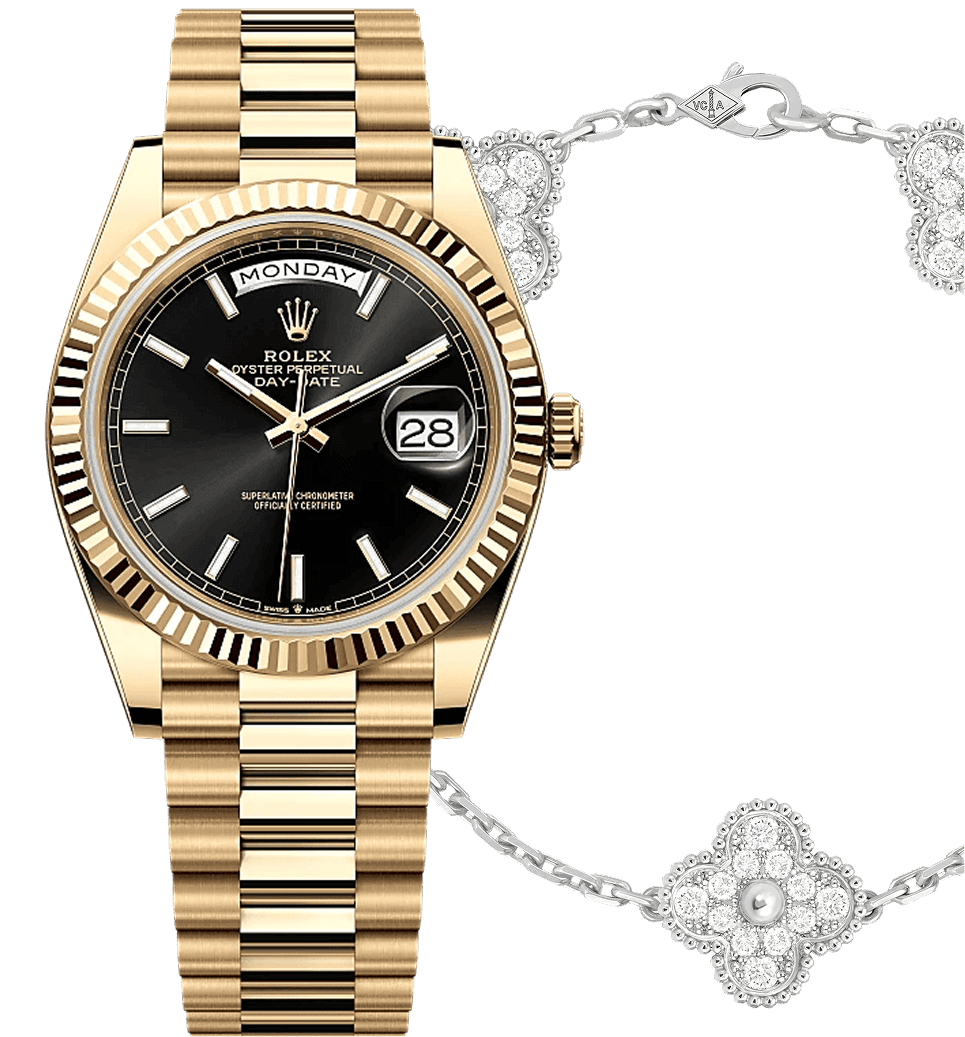
Usually, you should have a Rolex evaluated before polishing or servicing it solely for a sale.
The safest default is simple: document the watch, gather its paperwork, and let a specialist inspect its current condition before you authorize irreversible work.
The safest default is simple: document the watch, gather its paperwork, and let a specialist inspect its current condition before you authorize irreversible work.
ROLEX CONDITION & PRE-SALE PREPARATION
Short Answer: Evaluate the Rolex Before You Change It
If the watch is being prepared specifically for sale, there are three reasons to wait before polishing or servicing it.
First, a buyer wants to see the actual condition of the watch.
Second, some interventions are irreversible. Metal removed during polishing cannot simply be put back.
Third, the seller may spend money on work that the eventual buyer either did not need or would have preferred to handle differently.
That does not mean polishing or service is always bad.
A professionally refinished modern watch can still be highly marketable. Proper mechanical service is an important part of owning a watch long term. Rolex itself provides a comprehensive servicing process designed to restore mechanical performance and, when requested, refinish the case and bracelet.
The issue is more specific:
Should you commission that work immediately before selling, without first knowing how the watch is currently valued?
In many cases, the better sequence is:
First, a buyer wants to see the actual condition of the watch.
Second, some interventions are irreversible. Metal removed during polishing cannot simply be put back.
Third, the seller may spend money on work that the eventual buyer either did not need or would have preferred to handle differently.
That does not mean polishing or service is always bad.
A professionally refinished modern watch can still be highly marketable. Proper mechanical service is an important part of owning a watch long term. Rolex itself provides a comprehensive servicing process designed to restore mechanical performance and, when requested, refinish the case and bracelet.
The issue is more specific:
Should you commission that work immediately before selling, without first knowing how the watch is currently valued?
In many cases, the better sequence is:
evaluate first → understand the watch → decide whether work is economically or mechanically justified.
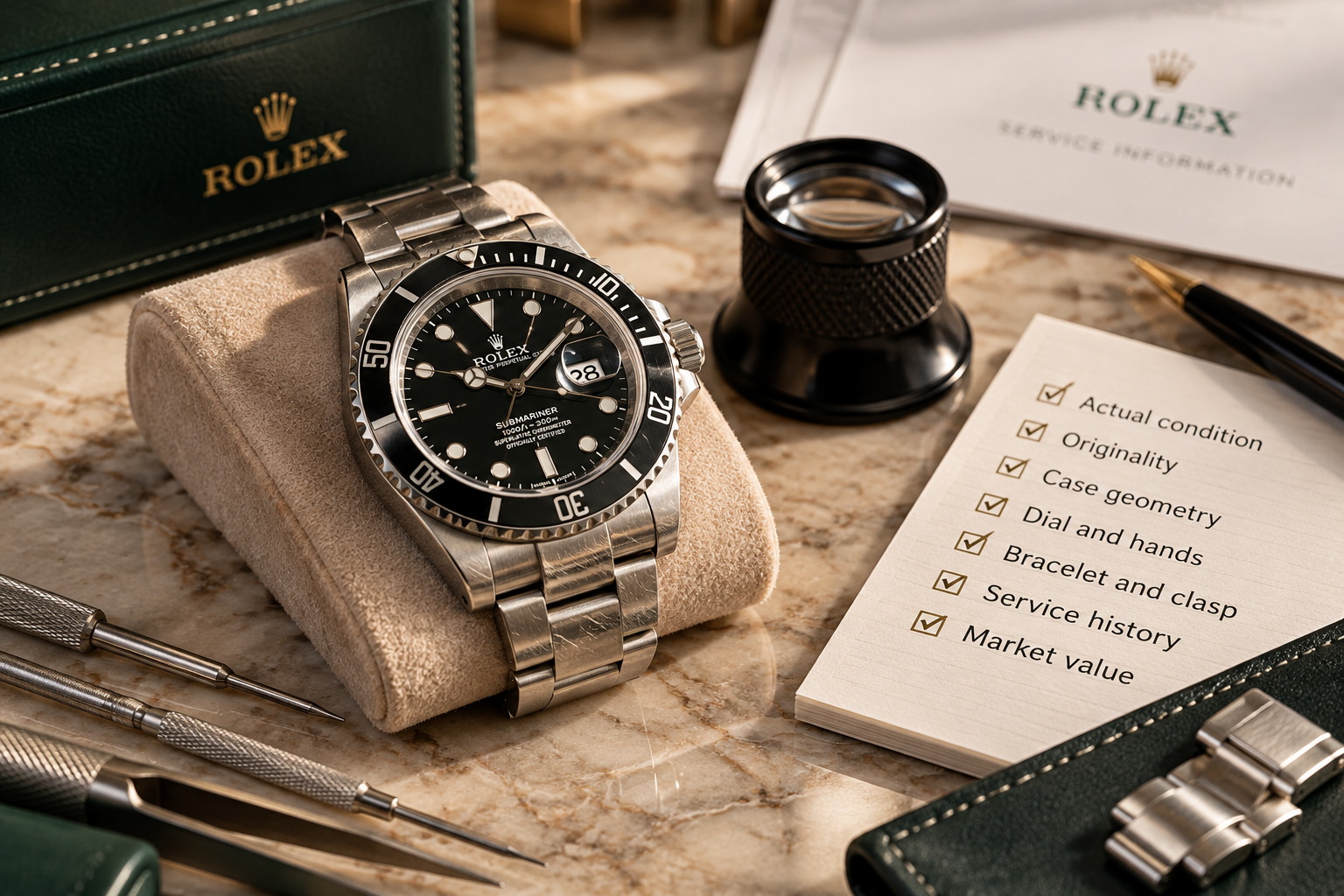
Why Polishing Changes a Rolex Case
Polishing does not simply “erase” a scratch.
To reduce a scratch, material around it has to be removed and the surface refinished.
Done professionally and conservatively, the amount can be extremely small.
Done repeatedly or aggressively, polishing can change features collectors use to judge condition.
To reduce a scratch, material around it has to be removed and the surface refinished.
Done professionally and conservatively, the amount can be extremely small.
Done repeatedly or aggressively, polishing can change features collectors use to judge condition.
What Buyers Look At
Depending on the reference, a specialist may examine:
- lug thickness;
- lug symmetry;
- crown-guard profile;
- case edges;
- bevels or chamfers where appropriate;
- transitions between brushed and polished surfaces;
- engraving and hallmark definition;
- overall case proportions.
Over-Polishing Is Different From Professional Refinishing
It is important not to turn this into an absolute rule.
A Rolex that has been polished once is not automatically undesirable.
Many pre-owned watches have received cosmetic refinishing during their lives.
The real questions are:
A Rolex that has been polished once is not automatically undesirable.
Many pre-owned watches have received cosmetic refinishing during their lives.
The real questions are:
- how much material was removed;
- whether the case geometry remains strong;
- whether the finish is appropriate;
- how important originality is for that particular reference;
- what buyers in that segment expect.
Modern vs. Vintage Rolex: Why the Answer Changes
The effect of polishing depends heavily on what watch you own.
Modern Rolex
With a contemporary Rolex, buyers often consider:
A careful professional refinish does not automatically destroy the resale appeal of a modern watch.
But that still does not mean you should pay to polish it immediately before requesting an offer.
A professional buyer can see the existing wear and decide how it affects the economics of the watch.
If cosmetic work is appropriate later, it can be done with knowledge of the actual watch and intended resale channel.
- overall presentation;
- scratches and dents;
- bracelet condition;
- complete box and papers;
- service condition;
- reference and configuration;
- current market demand.
A careful professional refinish does not automatically destroy the resale appeal of a modern watch.
But that still does not mean you should pay to polish it immediately before requesting an offer.
A professional buyer can see the existing wear and decide how it affects the economics of the watch.
If cosmetic work is appropriate later, it can be done with knowledge of the actual watch and intended resale channel.
Vintage and Collectible Rolex
With older and more collectible watches, originality can become much more important.
A collector may care about:
Bob's Watches notes that unpolished vintage examples generally attract stronger collector interest because original factory metal and geometry cannot be restored once removed.
This is also why “making the watch look newer” is not automatically the same as making it more valuable.
A vintage watch with honest age can be more interesting to the correct buyer than one whose surfaces have been aggressively refreshed.
A collector may care about:
- original case proportions;
- preserved lug geometry;
- period-correct dial;
- original or period-correct hands;
- bezel and insert;
- bracelet;
- natural aging;
- prior service replacements.
Bob's Watches notes that unpolished vintage examples generally attract stronger collector interest because original factory metal and geometry cannot be restored once removed.
This is also why “making the watch look newer” is not automatically the same as making it more valuable.
A vintage watch with honest age can be more interesting to the correct buyer than one whose surfaces have been aggressively refreshed.
Why Originality Matters Before a Sale
For a resale-focused Rolex evaluation, condition and originality are related but different.
A watch can look clean while being less original.
A watch can show scratches while retaining highly desirable original characteristics.
Consider two examples.
A watch can look clean while being less original.
A watch can show scratches while retaining highly desirable original characteristics.
Consider two examples.
Watch A
visible hairline scratches;
crisp case edges;
strong lug proportions;
original dial and hands;
no obvious aggressive previous refinishing.
crisp case edges;
strong lug proportions;
original dial and hands;
no obvious aggressive previous refinishing.
Watch B
shiny surface;
fewer visible scratches;
softened lugs;
rounded case transitions;
later replacement components.
fewer visible scratches;
softened lugs;
rounded case transitions;
later replacement components.
Watch B may look “newer” in photographs.
That does not automatically make it the more desirable watch.
This is particularly important with collector-oriented vintage references, where buyers often study the history of the case and components as part of the object itself.
That does not automatically make it the more desirable watch.
This is particularly important with collector-oriented vintage references, where buyers often study the history of the case and components as part of the object itself.
Original Does Not Mean Perfect
A useful Rolex evaluation is not looking for a watch that appears untouched by time.
It is asking whether the wear, components, finishing, and age make sense together.
That is why polishing before the evaluation can remove information the specialist would otherwise use when assessing condition.
For a broader explanation of how originality, polishing, service history, reference, and current demand affect price, see the Rolex Appraisal article.
It is asking whether the wear, components, finishing, and age make sense together.
That is why polishing before the evaluation can remove information the specialist would otherwise use when assessing condition.
For a broader explanation of how originality, polishing, service history, reference, and current demand affect price, see the Rolex Appraisal article.
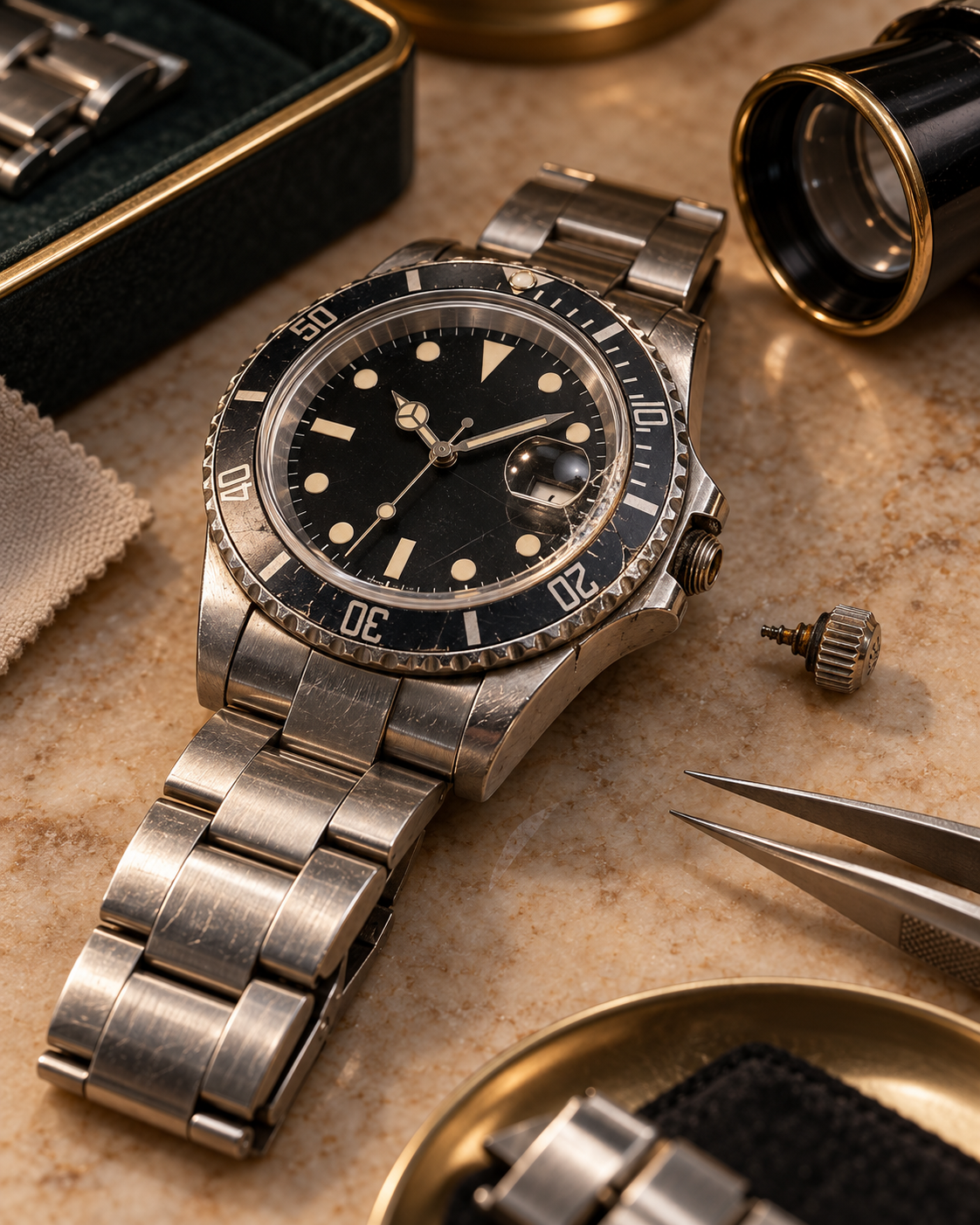
Scratches vs. Damage: They Are Not the Same Thing
Owners often see scratches and assume the watch must be repaired before anyone will want it.
That is rarely the right starting assumption.
That is rarely the right starting assumption.
Normal Wear
Normal wear can include:
These are expected on many pre-owned watches.
A professional buyer can account for them without requiring the seller to make the watch cosmetically perfect first.
- fine surface scratches;
- bracelet marks;
- minor clasp wear;
- light bezel marks;
- small case hairlines.
These are expected on many pre-owned watches.
A professional buyer can account for them without requiring the seller to make the watch cosmetically perfect first.
More Significant Damage
A different conversation begins with:
These issues may affect value more meaningfully because they can involve mechanical risk or substantial repair.
But even then, do not assume you have to fix the problem before anyone can evaluate the watch.
Specialist buyers regularly evaluate watches in imperfect or non-running condition and incorporate expected work into their assessment. Diamond Banc likewise advises that repair before sale is often unnecessary because a specialist can evaluate the watch and expected repair requirements in its current state.
- deep dents;
- severe case deformation;
- damaged or chipped crystal;
- corrosion;
- signs of moisture ingress;
- damaged crown or tube;
- major bracelet damage;
- a watch that stops or keeps time abnormally;
- impact damage.
These issues may affect value more meaningfully because they can involve mechanical risk or substantial repair.
But even then, do not assume you have to fix the problem before anyone can evaluate the watch.
Specialist buyers regularly evaluate watches in imperfect or non-running condition and incorporate expected work into their assessment. Diamond Banc likewise advises that repair before sale is often unnecessary because a specialist can evaluate the watch and expected repair requirements in its current state.
Should You Clean a Rolex Before Selling?
Gentle cleaning is different from polishing.
Removing fingerprints, surface dust, or ordinary grime does not require removing metal.
Rolex recommends occasional cleaning with a microfiber cloth. For appropriate watches with metal bracelets, Rolex also describes cleaning the case and bracelet with soapy water and a soft brush, provided the winding crown is properly screwed down.
Rolex recommends occasional cleaning with a microfiber cloth. For appropriate watches with metal bracelets, Rolex also describes cleaning the case and bracelet with soapy water and a soft brush, provided the winding crown is properly screwed down.
A Conservative Pre-Sale Approach
For a straightforward modern Rolex in known good condition:
In that situation, simple dry surface cleaning and professional inspection are the safer pre-sale approach.
- use a clean microfiber cloth;
- avoid polishing compounds;
- avoid abrasive cloths;
- avoid attempting scratch removal.
In that situation, simple dry surface cleaning and professional inspection are the safer pre-sale approach.
Do Not Try to “Improve” the Photos
A seller does not need to hide every scratch.
Clear photographs showing honest condition are more useful for a preliminary evaluation than reflections, heavy editing, or fresh cosmetic refinishing.
Clear photographs showing honest condition are more useful for a preliminary evaluation than reflections, heavy editing, or fresh cosmetic refinishing.
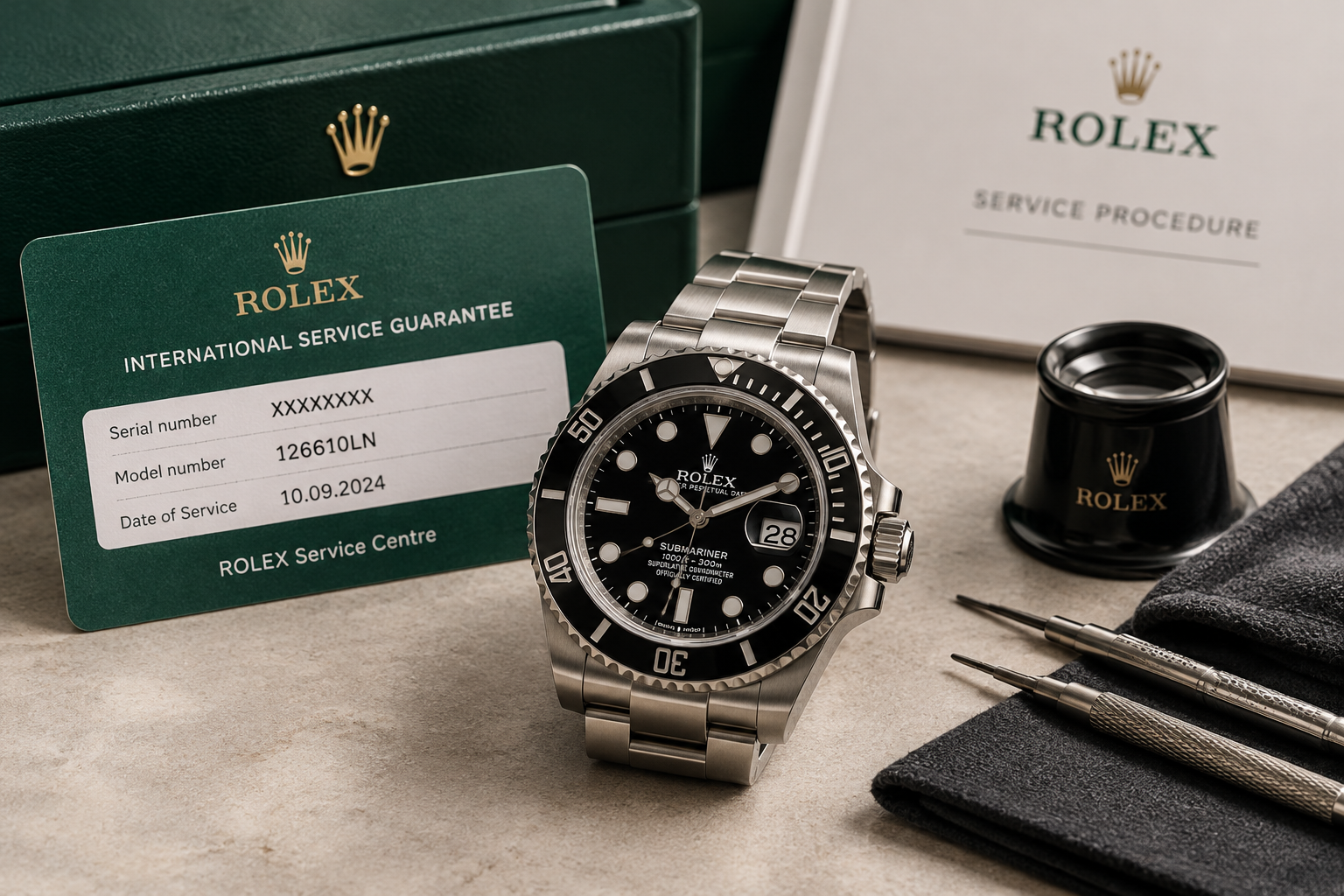
Should You Service a Rolex Before Selling?
Not automatically.
Servicing and polishing solve different problems.
Polishing is cosmetic.
A full service is primarily intended to restore the mechanical performance, reliability, lubrication, sealing, and condition of the watch.
Rolex's official service procedure includes complete movement disassembly, inspection, cleaning, lubrication, adjustments, waterproofness testing, and replacement of movement components that no longer meet Rolex requirements. The watch is returned with a two-year international service guarantee covering replacement parts and labor.
That can clearly be valuable to someone who intends to keep and use the watch.
But pre-sale economics are different.
Servicing and polishing solve different problems.
Polishing is cosmetic.
A full service is primarily intended to restore the mechanical performance, reliability, lubrication, sealing, and condition of the watch.
Rolex's official service procedure includes complete movement disassembly, inspection, cleaning, lubrication, adjustments, waterproofness testing, and replacement of movement components that no longer meet Rolex requirements. The watch is returned with a two-year international service guarantee covering replacement parts and labor.
That can clearly be valuable to someone who intends to keep and use the watch.
But pre-sale economics are different.
The Service Cost Is Not Automatically Added to the Offer
Suppose the market values a particular watch based on:
Paying for a service does not cause the market to automatically add the full service invoice to that value.
The buyer may already have:
Diamond Banc's current guidance similarly says that service history is useful context but servicing immediately before sale does not always increase value enough to justify the expense.
- reference;
- originality;
- condition;
- completeness;
- demand.
Paying for a service does not cause the market to automatically add the full service invoice to that value.
The buyer may already have:
- its own service resources;
- its own watchmaker;
- its own preferred approach to restoration;
- a resale channel where it will perform the necessary work after purchase.
Diamond Banc's current guidance similarly says that service history is useful context but servicing immediately before sale does not always increase value enough to justify the expense.
Existing Recent Service Is Different
If the watch was already serviced for normal ownership reasons, bring the documentation.
A recent Rolex Service Card or other documented service can help establish:
That is valuable information even if you should not commission a new service solely because you decided to sell this week.
A recent Rolex Service Card or other documented service can help establish:
- what was done;
- when it was done;
- who performed the work;
- whether the watch received recent maintenance.
That is valuable information even if you should not commission a new service solely because you decided to sell this week.
What If the Rolex Is Not Running Correctly?
A mechanical problem deserves attention—but attention does not automatically mean a full service before appraisal.
Examples include:
Tell the evaluator exactly what you observe.
Do not attempt amateur repair.
A professional buyer can then determine whether the condition:
A non-running Rolex can still retain significant value because its reference, components, originality, dial, case, bracelet, and movement remain valuable assets.
The question is not:
“Does it run perfectly?”
It is:
“What exactly is wrong, and how does that affect this watch in its market?”
Examples include:
- watch stops unexpectedly;
- unusual time gain or loss;
- crown does not operate normally;
- date function behaves incorrectly;
- unusual noise;
- visible moisture;
- inability to wind;
- chronograph functions do not behave correctly.
Tell the evaluator exactly what you observe.
Do not attempt amateur repair.
A professional buyer can then determine whether the condition:
- meaningfully affects value;
- requires further inspection;
- should be priced with an expected service cost;
- makes pre-sale repair worth considering.
A non-running Rolex can still retain significant value because its reference, components, originality, dial, case, bracelet, and movement remain valuable assets.
The question is not:
“Does it run perfectly?”
It is:
“What exactly is wrong, and how does that affect this watch in its market?”
What About Replacement Parts During Service?
This is one of the most important reasons to think carefully before servicing a collectible Rolex immediately before sale.
Rolex states that during its servicing process, movement parts that no longer meet its requirements are systematically replaced.
From a functional perspective, replacing worn components can be entirely appropriate.
From a collector perspective, however, the effect of replacing visible components can depend heavily on the reference.
Rolex states that during its servicing process, movement parts that no longer meet its requirements are systematically replaced.
From a functional perspective, replacing worn components can be entirely appropriate.
From a collector perspective, however, the effect of replacing visible components can depend heavily on the reference.
Genuine Service Parts Can Still Change Collector Appeal
There is an important distinction between:
genuine Rolex service component
and
original component that has remained with this watch for decades.
Both may be authentic Rolex.
They are not necessarily equivalent to a collector evaluating a vintage watch.
Particularly sensitive components can include:
genuine Rolex service component
and
original component that has remained with this watch for decades.
Both may be authentic Rolex.
They are not necessarily equivalent to a collector evaluating a vintage watch.
Particularly sensitive components can include:
- dial;
- hands;
- bezel;
- bezel insert;
- crown;
- bracelet or clasp.
Aftermarket Parts Are Another Category
Aftermarket:
Do not replace aftermarket or service components blindly before an evaluation.
First establish:
- dials;
- bezels;
- diamond settings;
- bracelets;
- other modifications
Do not replace aftermarket or service components blindly before an evaluation.
First establish:
- what components are currently present;
- whether they are genuine, service, period-correct, or aftermarket;
- how the current configuration affects value.
Does Rolex Service Include Polishing?
Do not assume that mechanical service and polishing must always happen together.
Rolex's current official service description says that the case and bracelet may be re-polished or satin-finished on request, according to the original finish.
This distinction is useful when discussing a potentially collectible watch.
If you are considering authorized service, clarify the exact approved scope of work before it begins.
Ask what is being proposed for:
For a modern watch you plan to keep, priorities may center on appearance and reliability.
For a vintage Rolex you plan to sell, preservation of originality may deserve greater weight.
Rolex's current official service description says that the case and bracelet may be re-polished or satin-finished on request, according to the original finish.
This distinction is useful when discussing a potentially collectible watch.
If you are considering authorized service, clarify the exact approved scope of work before it begins.
Ask what is being proposed for:
- case;
- bracelet;
- dial;
- hands;
- bezel;
- crown;
- movement components.
For a modern watch you plan to keep, priorities may center on appearance and reliability.
For a vintage Rolex you plan to sell, preservation of originality may deserve greater weight.
When Can Service Make Sense Before Selling?
The advice to “evaluate first” is a default, not a rule that no watch should ever receive pre-sale service.
There are situations where service may make sense.
There are situations where service may make sense.
A Known Mechanical Problem Is Creating Significant Uncertainty
If a specialist cannot responsibly assess the watch without diagnosing a major issue, additional inspection or repair may clarify the asset.
You Are Not Selling Immediately
If you plan to continue owning and wearing the watch for some time, servicing may be worthwhile for the normal reasons Rolex recommends maintenance—not because of a near-term sale.
The Buyer Specifically Recommends a Particular Step
After seeing the watch, a knowledgeable buyer may explain that a particular repair or service would materially improve its marketability.
At that point you can compare:
expected benefit vs. cost, time, and intervention.
That is a much better decision than servicing first and asking questions later.
At that point you can compare:
expected benefit vs. cost, time, and intervention.
That is a much better decision than servicing first and asking questions later.
What Buyers Want to Inspect Before You Polish or Service
A specialist evaluating a Rolex wants to see the evidence that exists now.
That can include:
That can include:
Case Geometry
- lugs;
- edges;
- crown guards;
- brushing;
- polished surfaces;
- previous refinishing.
Dial and Hands
- condition;
- originality;
- lume;
- spotting;
- service replacement;
- period consistency on older watches.
Bezel
- condition;
- insert;
- factory configuration;
- wear;
- replacement history.
Bracelet and Clasp
- stretch;
- scratches;
- missing links;
- reference/configuration;
- clasp condition.
Mechanical Condition
- winding;
- crown operation;
- date;
- chronograph where applicable;
- basic running behavior.
Documentation
- warranty card or papers;
- box;
- service records;
- Service Card;
- purchase receipt;
- extra links.
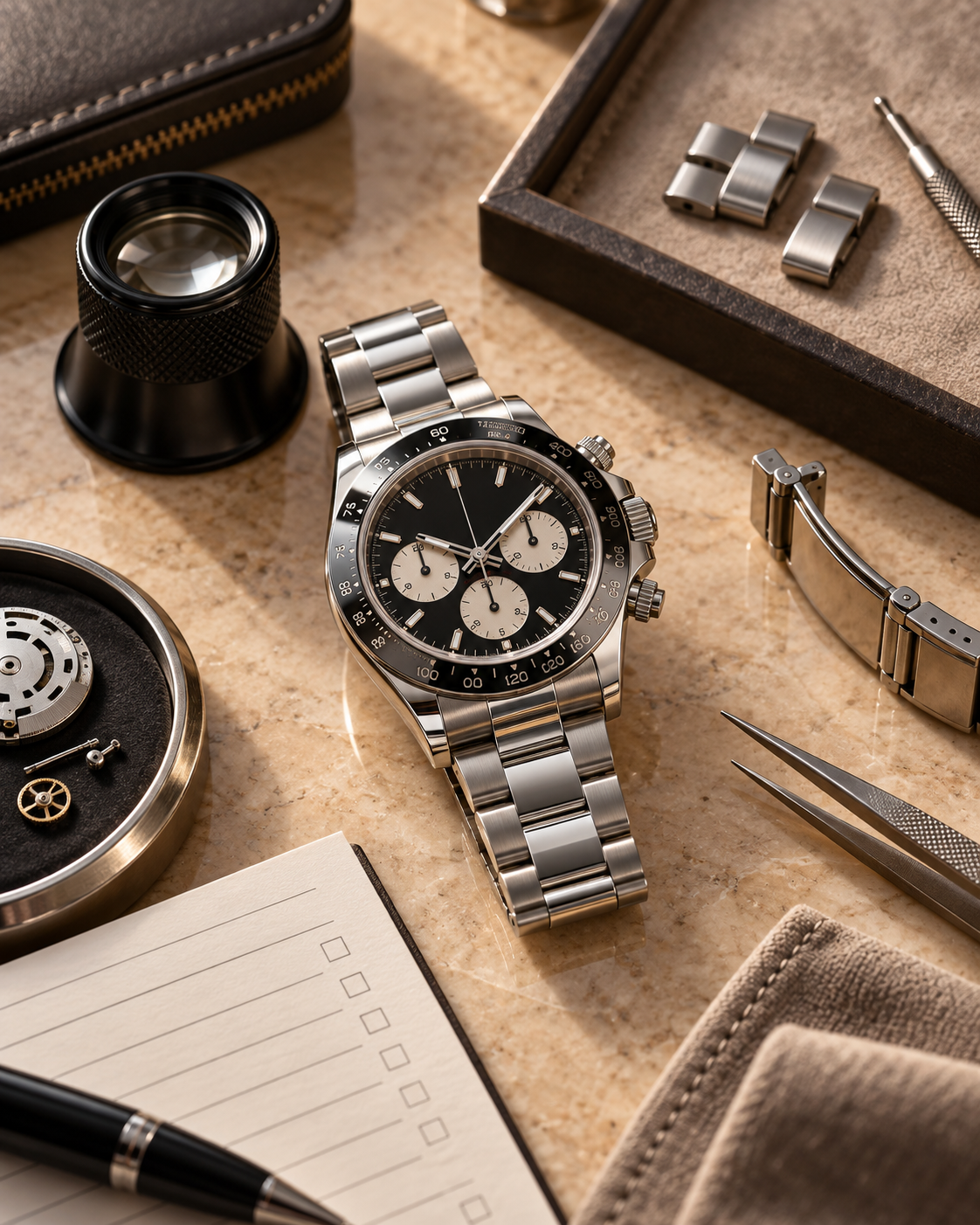
A Luxe Brokers Rolex evaluation considers reference and configuration, condition and originality, completeness, service history, and current market demand rather than requiring the watch to arrive cosmetically restored.
How to Prepare a Rolex for an Appraisal Instead
If you are considering selling, there is very little you need to do to the watch itself.
1. Leave the Finish Alone
Do not polish it merely to hide scratches.
2. Do Not Open the Case
A seller usually gains nothing by opening a Rolex without the correct tools and experience.
3. Photograph Its Actual Condition
Take clear photos of:
- dial;
- bezel;
- case sides;
- lugs;
- caseback;
- bracelet;
- clasp;
- visible wear.
4. Gather Everything You Have
Bring or photograph:
- box;
- warranty card;
- older papers;
- extra links;
- service records;
- Service Card;
- purchase receipt;
- previous appraisal.
5. Do Not Throw Away Old Components or Records
If you already have components from a previous service or repair, keep everything together with the watch.
6. Describe Problems Accurately
If it:
A transparent description helps the specialist determine what needs physical verification.
- loses time;
- stops;
- has a damaged crystal;
- has been polished;
- has replacement components;
- was modified;
A transparent description helps the specialist determine what needs physical verification.
7. Get the Current Condition Evaluated
This should happen before spending money solely to prepare the watch for sale.
For a complete breakdown of how reference, condition, originality, service history, box and papers, and market demand interact, see the Rolex Appraisal guide.
If you have already decided to sell, the existing Rolex Selling Guide explains the next steps in the process.
For a complete breakdown of how reference, condition, originality, service history, box and papers, and market demand interact, see the Rolex Appraisal guide.
If you have already decided to sell, the existing Rolex Selling Guide explains the next steps in the process.
A Practical Decision Table
The Bottom Line
If you are preparing to sell a Rolex, do not assume scratches, age, or an unknown service history need to be “fixed” first.
Polishing can alter the case permanently. The effect is especially important on vintage and collectible references where original geometry and surfaces may contribute to collector appeal.
Service is different: mechanical maintenance can be valuable, but paying for a full service immediately before sale does not guarantee that you will recover the expense. On older watches, replacement components can also affect originality.
The most sensible sequence for many sellers is:
preserve the current condition → document the watch → gather box, papers, links, and service records → obtain an item-specific evaluation → decide whether any work actually makes sense.
Before servicing or polishing your Rolex solely for a sale, let the existing watch tell the evaluator what it is.
Polishing can alter the case permanently. The effect is especially important on vintage and collectible references where original geometry and surfaces may contribute to collector appeal.
Service is different: mechanical maintenance can be valuable, but paying for a full service immediately before sale does not guarantee that you will recover the expense. On older watches, replacement components can also affect originality.
The most sensible sequence for many sellers is:
preserve the current condition → document the watch → gather box, papers, links, and service records → obtain an item-specific evaluation → decide whether any work actually makes sense.
Before servicing or polishing your Rolex solely for a sale, let the existing watch tell the evaluator what it is.
Before You Polish or Service Your Rolex, Have Its Current Condition Evaluated
Scratches, an older service history, or even a mechanical issue do not automatically mean the watch should be refinished or repaired before a sale.
Let the watch be reviewed in its present condition first. Luxe Brokers evaluates the reference, case and bracelet condition, originality, box and papers, service history, and current secondary-market demand before determining how any required work affects the watch.
Let the watch be reviewed in its present condition first. Luxe Brokers evaluates the reference, case and bracelet condition, originality, box and papers, service history, and current secondary-market demand before determining how any required work affects the watch.
Frequently Asked Questions
Usually, no. Have the watch evaluated in its current condition first. Polishing removes metal and can change case geometry, while scratches and honest wear can be evaluated without refinishing.
It can. The risk is greatest with vintage and collectible watches where original case geometry matters. A light professional refinish on a modern watch may have much less impact, while aggressive or repeated polishing can reduce desirability.
No. Reference, dial, originality, overall condition, completeness, rarity, and current demand also matter. “Unpolished” is one condition factor, not a guarantee of higher value.
Not automatically. A service can improve mechanical condition, but the cost is not guaranteed to be recovered in the sale price. Have the watch evaluated first, especially if it is vintage or collectible.
Yes. Normal wear and scratches are common on pre-owned watches. A professional buyer can evaluate the Rolex in its current condition without requiring cosmetic refinishing first.
Potentially, yes. A non-running Rolex may still have substantial value based on its reference, originality, components, and condition. The mechanical problem can be considered during the evaluation.
Rolex states that during its service process, the case and bracelet can be re-polished or satin-finished on request according to the original finish.
It depends on the watch and the component. Genuine service parts can be entirely appropriate mechanically, but on certain vintage or collectible watches buyers may prefer original or period-correct visible components.
Light surface cleaning is generally enough. Rolex recommends a microfiber cloth and, for appropriately sealed watches, soapy water and a soft brush. Avoid polishing compounds or DIY scratch-removal products.