


Daily 10 am to 7 pm
Daily 10 am to 7 pm

Jewelry Appraisal vs. Resale Value: What Is Your Jewelry Really Worth?
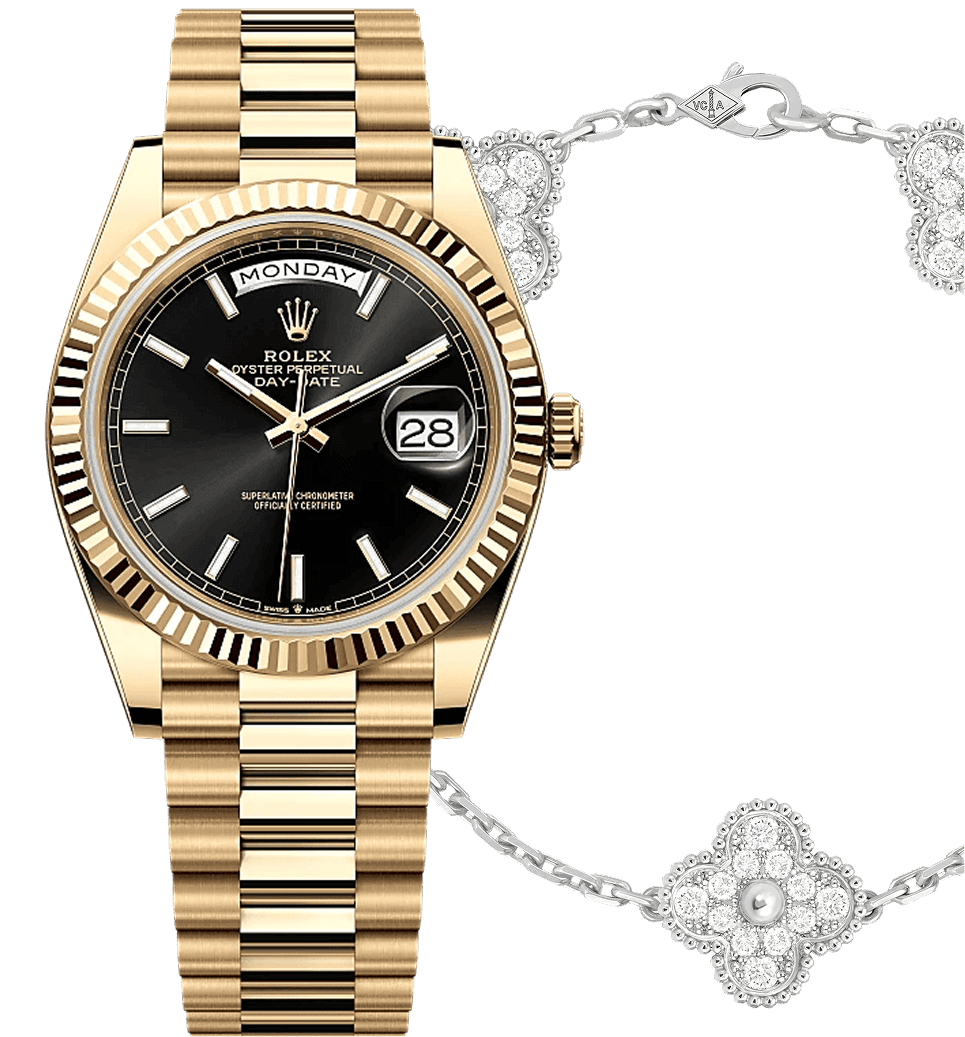
The number on a jewelry appraisal is not automatically what your jewelry will sell for. An appraisal states a value for a specific purpose—often retail replacement for insurance—while resale value reflects what the actual piece may command in the current secondary market.
Both numbers can be reasonable and still be very different.
If you are thinking about selling, the most important question is not simply, “What does my appraisal say?” It is: What type of value does this appraisal represent, and what would this particular piece realistically sell for today?
JEWELRY VALUE & APPRAISALS
Understanding the Different Types of Jewelry Value
Jewelry can have different values depending on the purpose of the valuation and the market being considered.
The distinction matters because jewelry does not have one universal value. The appropriate number depends on the item, the purpose of the valuation, the market being considered, and how the jewelry will actually be sold.
Insurance Replacement Value
What could it cost to replace the item with a comparable piece?
Most useful for:
Insurance coverage
Fair Market Value
What might a willing buyer and willing seller agree on in the relevant market?
Most useful for:
Certain estate, tax, legal, or valuation purposes
Buyer Offer
What a specific buyer is prepared to pay for the item now.
Most useful for:
An immediate sale
Resale Value
What could the item realistically achieve through a particular resale channel?
Most useful for:
Planning a sale
What Does a Jewelry Appraisal Actually Tell You?
A professional jewelry appraisal should do more than place a dollar amount at the bottom of a page. It should identify and describe the item, explain the basis of value being used, state the purpose of the appraisal, and reflect a particular effective date.
That purpose is critical.
An appraisal prepared for insurance is answering a different question from an appraisal prepared for an estate, a charitable contribution, a legal matter, or an anticipated sale.
That purpose is critical.
An appraisal prepared for insurance is answering a different question from an appraisal prepared for an estate, a charitable contribution, a legal matter, or an anticipated sale.
Insurance Replacement Appraisals
Many jewelry owners first encounter an appraisal when an item is purchased or added to an insurance policy.
In that context, the appraiser may estimate retail replacement value: the amount that could be required to replace the piece with a comparable item through an appropriate retail source.
That calculation can include factors that have little connection to what someone would pay for your pre-owned piece today, such as retail sourcing, manufacturing, setting work, dealer overhead, and the cost of obtaining a suitable replacement.
An insurance appraisal can therefore be entirely legitimate while still being a poor benchmark for a resale offer.
Fair Market Value Appraisals
Fair market value is a different concept. It generally considers the price at which property would change hands between informed, willing parties under the relevant market conditions.
The important phrase is relevant market.
The market for replacing a new diamond ring at retail is not necessarily the same market in which a pre-owned ring would be sold. An appraisal should identify what market and valuation premise it is using rather than presenting “value” as an absolute number.
An Appraisal Is Not the Same Thing as a Grading Report
Diamond paperwork creates another common source of confusion.
A GIA report, for example, documents characteristics such as a diamond's carat weight, color, clarity, cut information, measurements, and other identifying details. It does not assign the diamond a monetary appraisal value.
Those characteristics are important inputs when the market value of a diamond is evaluated, but the grading report itself is not a selling price.
What Is Resale Value?
Jewelry resale value is the value of a piece in the secondary market.
But even that definition needs context, because there is no single secondary-market price that applies in every transaction.
The amount you could receive may differ depending on whether you:
A direct buyer may offer speed, certainty, and immediate liquidity while taking responsibility for authentication, inventory, marketing, and eventual resale.
A consignment arrangement may expose an item to a retail buyer and potentially support a different asking price, but the seller may wait longer and pay a commission.
An auction introduces competitive bidding but also involves fees, timing, estimates, reserves, and no guarantee that a particular result will be achieved.
A private sale may eliminate a dealer margin, but the seller takes on the work and risk of finding a buyer, establishing trust, proving authenticity, handling payment, and completing the transaction.
For that reason, resale value should always be considered together with the intended selling channel and timeline.
But even that definition needs context, because there is no single secondary-market price that applies in every transaction.
The amount you could receive may differ depending on whether you:
- sell directly to a professional jewelry buyer;
- consign the piece to a dealer;
- sell through an auction;
- sell privately to another consumer;
- sell primarily for precious-metal or gemstone value.
A direct buyer may offer speed, certainty, and immediate liquidity while taking responsibility for authentication, inventory, marketing, and eventual resale.
A consignment arrangement may expose an item to a retail buyer and potentially support a different asking price, but the seller may wait longer and pay a commission.
An auction introduces competitive bidding but also involves fees, timing, estimates, reserves, and no guarantee that a particular result will be achieved.
A private sale may eliminate a dealer margin, but the seller takes on the work and risk of finding a buyer, establishing trust, proving authenticity, handling payment, and completing the transaction.
For that reason, resale value should always be considered together with the intended selling channel and timeline.
Why Appraisal Value Is Usually Higher Than a Cash Offer
When an insurance appraisal is higher than an offer to buy the same jewelry, it does not automatically mean either number is wrong.
They are often measuring different transactions.
1. One may be based on replacement; the other is based on resale
Replacement value asks what it could cost to acquire a comparable item.
A buyer's offer asks what makes economic sense for acquiring your existing item in its current condition and reselling it into today's market.
Those are structurally different calculations.
2. Retail pricing includes costs that do not transfer back to the seller
A new retail purchase may include design, manufacturing, setting labor, store overhead, marketing, warranties, sourcing costs, and retail margin.
Those costs helped determine the original retail price, but they are not automatically recoverable when the item returns to the secondary market.
3. A professional buyer takes on market risk
A buyer may need to verify the item, authenticate a brand, re-grade or further inspect stones, repair or clean the piece, photograph it, market it, insure it, and hold it until another buyer is found.
Demand can also change while the piece is in inventory.
That risk is part of the economics of a direct purchase.
4. Pre-owned demand is selective
Two pieces with similar materials can perform very differently in resale.
One may be an easily recognized designer model with an active buyer pool. Another may be a custom design that was expensive to make but appeals to a much narrower audience.
Original cost alone does not establish resale demand.
5. There is no reliable universal percentage
It is tempting to look for a formula such as “jewelry sells for a certain percentage of appraisal value.”
That shortcut is unreliable.
The relationship can vary dramatically between an unbranded gold ring, an important diamond, a signed Cartier bracelet, an antique brooch, a contemporary custom piece, and jewelry being valued largely for its precious-metal content.
A realistic estimate has to start with the actual item.
They are often measuring different transactions.
1. One may be based on replacement; the other is based on resale
Replacement value asks what it could cost to acquire a comparable item.
A buyer's offer asks what makes economic sense for acquiring your existing item in its current condition and reselling it into today's market.
Those are structurally different calculations.
2. Retail pricing includes costs that do not transfer back to the seller
A new retail purchase may include design, manufacturing, setting labor, store overhead, marketing, warranties, sourcing costs, and retail margin.
Those costs helped determine the original retail price, but they are not automatically recoverable when the item returns to the secondary market.
3. A professional buyer takes on market risk
A buyer may need to verify the item, authenticate a brand, re-grade or further inspect stones, repair or clean the piece, photograph it, market it, insure it, and hold it until another buyer is found.
Demand can also change while the piece is in inventory.
That risk is part of the economics of a direct purchase.
4. Pre-owned demand is selective
Two pieces with similar materials can perform very differently in resale.
One may be an easily recognized designer model with an active buyer pool. Another may be a custom design that was expensive to make but appeals to a much narrower audience.
Original cost alone does not establish resale demand.
5. There is no reliable universal percentage
It is tempting to look for a formula such as “jewelry sells for a certain percentage of appraisal value.”
That shortcut is unreliable.
The relationship can vary dramatically between an unbranded gold ring, an important diamond, a signed Cartier bracelet, an antique brooch, a contemporary custom piece, and jewelry being valued largely for its precious-metal content.
A realistic estimate has to start with the actual item.
Insurance Value vs. Fair Market Value vs. Resale Value
The words are often used interchangeably, but they should not be.
Insurance replacement value
Question: What could it cost to replace this piece with a comparable item?
This value is designed around replacement, not around selling your existing jewelry.
Fair market value
Question: What price would informed, willing parties reasonably agree upon in the market relevant to the appraisal?
Fair market value can be required for specific tax, estate, donation, legal, or other valuation purposes. The exact definition and required methodology can depend on the assignment.
It should not automatically be treated as either retail replacement value or an immediate cash offer.
Resale value
Question: What could this piece realistically achieve if sold in the secondary market?
A meaningful resale estimate should specify or at least consider the selling channel.
Immediate purchase offer
Question: What will a particular buyer pay for the item now?
This is a transactional number rather than a theoretical valuation. It reflects the item, current demand, the buyer's business model, and the risks and costs associated with completing and eventually reselling the purchase.
Insurance replacement value
Question: What could it cost to replace this piece with a comparable item?
This value is designed around replacement, not around selling your existing jewelry.
Fair market value
Question: What price would informed, willing parties reasonably agree upon in the market relevant to the appraisal?
Fair market value can be required for specific tax, estate, donation, legal, or other valuation purposes. The exact definition and required methodology can depend on the assignment.
It should not automatically be treated as either retail replacement value or an immediate cash offer.
Resale value
Question: What could this piece realistically achieve if sold in the secondary market?
A meaningful resale estimate should specify or at least consider the selling channel.
Immediate purchase offer
Question: What will a particular buyer pay for the item now?
This is a transactional number rather than a theoretical valuation. It reflects the item, current demand, the buyer's business model, and the risks and costs associated with completing and eventually reselling the purchase.
What Actually Determines What a Buyer Will Pay?
Materials and measurable specifications
This may include:
Authenticity and identity
Before assigning a designer or collector premium, a buyer needs to know exactly what the item is.
Brand signatures, hallmarks, serial numbers, construction details, certificates, invoices, service records, and other documentation can help identify and authenticate a piece.
Documentation can be valuable, but paperwork by itself does not guarantee a particular resale price.
Brand and model
A signed luxury piece can follow a very different resale path from visually similar unbranded jewelry.
Recognizable collections may have an established secondary-market audience. In those cases, valuing the item only for its gold or stones could miss an important part of its market value.
This is why designer jewelry should be evaluated as a complete piece before anyone assumes it should be treated as scrap or component material.
This may include:
- gold or platinum purity;
- total weight;
- diamond or gemstone type;
- diamond carat weight and quality characteristics;
- construction and craftsmanship;
- the number and quality of smaller stones.
Authenticity and identity
Before assigning a designer or collector premium, a buyer needs to know exactly what the item is.
Brand signatures, hallmarks, serial numbers, construction details, certificates, invoices, service records, and other documentation can help identify and authenticate a piece.
Documentation can be valuable, but paperwork by itself does not guarantee a particular resale price.
Brand and model
A signed luxury piece can follow a very different resale path from visually similar unbranded jewelry.
Recognizable collections may have an established secondary-market audience. In those cases, valuing the item only for its gold or stones could miss an important part of its market value.
This is why designer jewelry should be evaluated as a complete piece before anyone assumes it should be treated as scrap or component material.
Condition and alterations
Wear is normal in pre-owned jewelry, but condition can affect buyer demand.
Important considerations may include:
Provenance and documentation
For most jewelry, value comes primarily from the object itself.
For some estate, antique, artist-made, or collectible pieces, documented origin can matter considerably.
A story without documentation and documented provenance are not the same thing. Buyers need evidence that can travel with the item and support its identity in a future transaction.
Current demand and liquidity
Resale value is ultimately connected to the market for the item today.
A piece can be beautifully made and expensive to reproduce while still having limited secondary-market demand. Conversely, a recognizable design with an active buyer base may be easier to place.
Liquidity matters because a price that might be achievable after a long search is not necessarily equivalent to the amount available in an immediate transaction.
Wear is normal in pre-owned jewelry, but condition can affect buyer demand.
Important considerations may include:
- damaged or missing stones;
- worn prongs;
- broken clasps;
- deep scratches or dents;
- previous repairs;
- excessive polishing;
- altered sizing or components;
- replacement parts on signed pieces.
Provenance and documentation
For most jewelry, value comes primarily from the object itself.
For some estate, antique, artist-made, or collectible pieces, documented origin can matter considerably.
A story without documentation and documented provenance are not the same thing. Buyers need evidence that can travel with the item and support its identity in a future transaction.
Current demand and liquidity
Resale value is ultimately connected to the market for the item today.
A piece can be beautifully made and expensive to reproduce while still having limited secondary-market demand. Conversely, a recognizable design with an active buyer base may be easier to place.
Liquidity matters because a price that might be achievable after a long search is not necessarily equivalent to the amount available in an immediate transaction.
A buyer does not arrive at a jewelry resale value by looking only at the number on an old appraisal.
The strongest evaluations combine several layers of information.
The strongest evaluations combine several layers of information.
How Diamonds Affect Resale Value
Diamonds require their own analysis because value can be concentrated heavily in the center stone rather than the metal setting.
A grading report can make the characteristics easier to verify, especially for an important stone, but it does not establish a guaranteed selling price.
Natural and laboratory-grown diamonds should also not be assumed to follow the same resale market. Their supply, pricing, and secondary-market behavior differ, so the diamond must first be correctly identified.
For a mounted diamond, the ring itself can matter as well. The setting’s metal, workmanship, condition, and designer origin may contribute additional value.
If your item is primarily a ring, see how LuxeBrokers evaluates diamond rings. For a deeper explanation of the selling process, the existing Diamond Selling Guide provides additional context.
Diamond Selling Guide
- carat weight
- cut
- color
- clarity
- shape
- proportions
- fluorescence
- condition
- whether the stone is loose or mounted
- grading documentation
- current demand for that particular combination of characteristics
A grading report can make the characteristics easier to verify, especially for an important stone, but it does not establish a guaranteed selling price.
Natural and laboratory-grown diamonds should also not be assumed to follow the same resale market. Their supply, pricing, and secondary-market behavior differ, so the diamond must first be correctly identified.
For a mounted diamond, the ring itself can matter as well. The setting’s metal, workmanship, condition, and designer origin may contribute additional value.
If your item is primarily a ring, see how LuxeBrokers evaluates diamond rings. For a deeper explanation of the selling process, the existing Diamond Selling Guide provides additional context.
Diamond Selling Guide
How Designer Brands Affect Resale Value
Brand can be one of the clearest examples of why jewelry should not automatically be reduced to metal and gemstone value.
An authentic signed piece from a recognized luxury house may have an identifiable collection or model, documented retail history, an established pre-owned buyer base, recognizable design language, and collector demand that exists independently of raw material value.
But the presence of a brand name does not create an automatic or uniform premium. Buyers still look at the exact piece.
Collection, size, metal, gemstone configuration, age, condition, current desirability, discontinued status, original documentation, packaging, and modifications can all matter. A classic, easily identifiable model in good condition may behave very differently in resale from an obscure or heavily altered piece from the same maker.
An authentic signed piece from a recognized luxury house may have an identifiable collection or model, documented retail history, an established pre-owned buyer base, recognizable design language, and collector demand that exists independently of raw material value.
But the presence of a brand name does not create an automatic or uniform premium. Buyers still look at the exact piece.
Collection, size, metal, gemstone configuration, age, condition, current desirability, discontinued status, original documentation, packaging, and modifications can all matter. A classic, easily identifiable model in good condition may behave very differently in resale from an obscure or heavily altered piece from the same maker.
How Gold and Platinum Affect Value
For jewelry whose value is driven primarily by precious metal, the starting point is usually straightforward: weight + purity + current metal market conditions.
For gold, a 14K piece contains a different proportion of fine gold than an 18K piece. Hallmarks such as 585 or 750 can provide an initial indication of purity, although testing may still be appropriate.
The LuxeBrokers Gold Karat Guide explains how karat, fineness, weight, and the market reference price relate to gold valuation.
But metal value is only the starting point for some jewelry.
A signed 18K bracelet and an unbranded 18K bracelet of similar weight may contain similar amounts of gold while having very different resale markets.
Platinum jewelry follows the same broader principle: metal content matters, but the complete item, stones, brand, design, and demand may matter as well.
For gold, a 14K piece contains a different proportion of fine gold than an 18K piece. Hallmarks such as 585 or 750 can provide an initial indication of purity, although testing may still be appropriate.
The LuxeBrokers Gold Karat Guide explains how karat, fineness, weight, and the market reference price relate to gold valuation.
But metal value is only the starting point for some jewelry.
- a recognized maker
- collectible design
- meaningful diamonds or gemstones
- estate or period interest
- craftsmanship that has a functioning secondary market
A signed 18K bracelet and an unbranded 18K bracelet of similar weight may contain similar amounts of gold while having very different resale markets.
Platinum jewelry follows the same broader principle: metal content matters, but the complete item, stones, brand, design, and demand may matter as well.
When You Should Get an Independent Appraisal
An independent appraisal can be especially valuable when you need a documented value rather than simply an offer.
The key is to tell the appraiser why you need the appraisal. An insurance appraisal is not automatically suitable for a tax assignment, and neither necessarily answers what you can receive in an immediate sale.
Do you need an appraisal before selling?
Not always. A knowledgeable jewelry buyer can usually evaluate the item directly. For many sellers, paying for a new insurance appraisal immediately before a sale adds little useful information because the buyer still has to establish the item’s current resale economics independently.
A formal appraisal makes more sense when you need an independent document, when the item is unusually complex, or when confirming the nature of the property before choosing a selling route has meaningful value.
- you need to insure an important piece
- jewelry is part of an estate or legal matter
- a tax or charitable valuation requires formal documentation
- the item is unusual, antique, highly valuable, or difficult to identify
- you need an independent written opinion for a dispute or asset division
- the purpose requires a specific definition of value
The key is to tell the appraiser why you need the appraisal. An insurance appraisal is not automatically suitable for a tax assignment, and neither necessarily answers what you can receive in an immediate sale.
Do you need an appraisal before selling?
Not always. A knowledgeable jewelry buyer can usually evaluate the item directly. For many sellers, paying for a new insurance appraisal immediately before a sale adds little useful information because the buyer still has to establish the item’s current resale economics independently.
A formal appraisal makes more sense when you need an independent document, when the item is unusually complex, or when confirming the nature of the property before choosing a selling route has meaningful value.
How to Get a Realistic Selling Estimate
1. Identify exactly what you own
Do not worry if some of these are missing. They are supporting evidence, not prerequisites for every evaluation.
2. Document the condition
Good information improves the quality of an initial estimate.
3. Separate asking prices from actual market evidence
An online listing tells you what a seller hopes to receive. It does not necessarily tell you what comparable pieces actually sell for. Professional valuation requires a judgment about realistic market behavior, not just the highest visible asking price.
- karat or fineness marks
- maker signatures
- serial or model numbers
- diamond or gemstone reports
- receipts
- previous appraisals
- original boxes or branded packaging
Do not worry if some of these are missing. They are supporting evidence, not prerequisites for every evaluation.
2. Document the condition
- the entire piece
- front and back
- hallmarks and signatures
- stones and settings
- clasps or closures
- visible wear or damage
- any certificates or appraisal paperwork
Good information improves the quality of an initial estimate.
3. Separate asking prices from actual market evidence
An online listing tells you what a seller hopes to receive. It does not necessarily tell you what comparable pieces actually sell for. Professional valuation requires a judgment about realistic market behavior, not just the highest visible asking price.
4. Evaluate the piece in the correct category
A diamond ring should not automatically be priced as gold. A signed designer bracelet should not automatically be priced as scrap. An ordinary broken gold item should not automatically be treated as a collectible. The valuation method has to follow what the item actually is.
5. Compare selling channels, not just headline numbers
A higher theoretical price can become less attractive after commissions, shipping, insurance, repair costs, months of waiting, or transaction risk.
6. Get an item-specific market evaluation
Ultimately, the most useful estimate for someone preparing to sell comes from examining the actual piece against the market that exists now. LuxeBrokers evaluates fine, estate, diamond, and signed jewelry based on the factors that influence current resale pricing rather than treating an insurance appraisal as a guaranteed selling price. You can review the jewelry selling and evaluation process before deciding whether you want to proceed.
A diamond ring should not automatically be priced as gold. A signed designer bracelet should not automatically be priced as scrap. An ordinary broken gold item should not automatically be treated as a collectible. The valuation method has to follow what the item actually is.
5. Compare selling channels, not just headline numbers
A higher theoretical price can become less attractive after commissions, shipping, insurance, repair costs, months of waiting, or transaction risk.
- expected net proceeds
- time to sale
- fees
- certainty
- security
- who assumes authentication and resale risk
6. Get an item-specific market evaluation
Ultimately, the most useful estimate for someone preparing to sell comes from examining the actual piece against the market that exists now. LuxeBrokers evaluates fine, estate, diamond, and signed jewelry based on the factors that influence current resale pricing rather than treating an insurance appraisal as a guaranteed selling price. You can review the jewelry selling and evaluation process before deciding whether you want to proceed.
If your goal is to understand what your jewelry could sell for, approach the process from the resale market backward rather than from the appraisal number downward.
The Bottom Line
An appraisal value and resale value can both be valid because they may answer completely different questions.
Appraisal value is meaningful only when you know the purpose, definition of value, market, and effective date behind it.
Resale value depends on what the item is, its condition, current demand, and the channel through which it will be sold.
If you are preparing to sell, use the appraisal as information—not as an automatic asking price. Identify the item accurately, understand what actually drives its secondary-market demand, and obtain a current evaluation based on the piece you own today.
Appraisal value is meaningful only when you know the purpose, definition of value, market, and effective date behind it.
Resale value depends on what the item is, its condition, current demand, and the channel through which it will be sold.
If you are preparing to sell, use the appraisal as information—not as an automatic asking price. Identify the item accurately, understand what actually drives its secondary-market demand, and obtain a current evaluation based on the piece you own today.
Want a Selling Estimate for the Jewelry You Actually Own?
An appraisal can provide useful documentation, but a realistic resale estimate has to consider the specific item and today's market.
Send clear photos of your jewelry, including any hallmarks, brand signatures, grading reports, or previous appraisal documents you have. LuxeBrokers can review the information and provide a preliminary market-based estimate, with in-person verification available when needed.
Send clear photos of your jewelry, including any hallmarks, brand signatures, grading reports, or previous appraisal documents you have. LuxeBrokers can review the information and provide a preliminary market-based estimate, with in-person verification available when needed.
Frequently Asked Questions
No. An appraisal states a value for a defined purpose, such as insurance replacement or fair market value. Resale value reflects what the jewelry may realistically achieve in the secondary market through a particular selling channel.
An insurance appraisal may reflect the cost of replacing the item through a retail source. A buyer's offer reflects the economics of purchasing your existing piece, including condition, current demand, verification, resale costs, inventory risk, and the buyer's margin.
Not necessarily. A formal appraisal is valuable when you need independent documentation for insurance, estate, tax, legal, or other purposes. If your only goal is to sell, a specialist buyer can often evaluate the jewelry directly.
No. A GIA report documents a diamond's identifying and quality characteristics but does not assign a monetary appraisal value. Those characteristics can then be used when evaluating the diamond against the current market.
Start by gathering clear photos, hallmarks, maker signatures, certificates, receipts, and any previous appraisal documents. Then obtain an item-specific evaluation that considers the piece's materials, gemstones, brand, condition, and current resale demand.
Yes. Authentic jewelry from an established designer or luxury house can have secondary-market value above its component materials when the brand, collection, condition, and current demand support a premium.