


Daily 10 am to 7 pm
Daily 10 am to 7 pm

Where Should You Sell Jewelry? Jewelry Buyer vs. Pawn Shop vs. Auction vs. Consignment
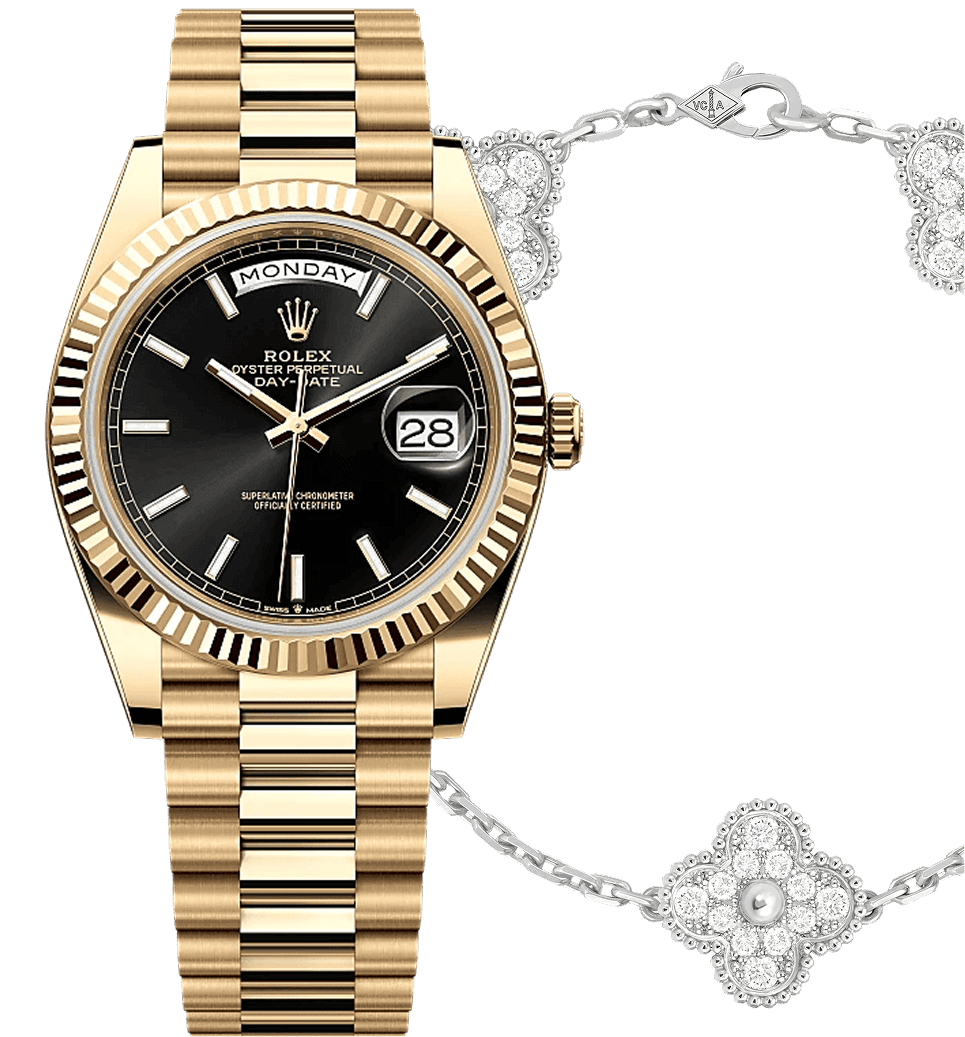
There is no single best place to sell every piece of jewelry.
A specialist buyer may make sense when you want a fast, item-specific offer. A pawn shop can be useful when immediate local access—or a loan rather than a permanent sale—is the priority. Auction may suit an exceptional piece with collector appeal. Consignment can make sense when you are willing to wait for a retail buyer. A marketplace gives you more control, but also more work and transaction risk.
The right choice depends on what you own and what matters most: speed, expertise, certainty, privacy, potential upside, or convenience.
A specialist buyer may make sense when you want a fast, item-specific offer. A pawn shop can be useful when immediate local access—or a loan rather than a permanent sale—is the priority. Auction may suit an exceptional piece with collector appeal. Consignment can make sense when you are willing to wait for a retail buyer. A marketplace gives you more control, but also more work and transaction risk.
The right choice depends on what you own and what matters most: speed, expertise, certainty, privacy, potential upside, or convenience.
JEWELRY SELLING OPTIONS
Jewelry Selling Options Compared
Use this comparison as a starting point, not as a promise of results. Individual businesses, contracts, fees, and items vary.
Specialist jewelry buyer
- Speed - High
- Expertise -High when the specialist matches the item
- Privacy - Often high
- Price Certainty - High once a final offer is made
- Seller Effort - Low
Consignment
- Speed - Low
- Expertise - Often high when the dealer specializes in the category
- Privacy - Medium
- Price Certainty - Low until the item actually sells
- Seller Effort - Medium
Auction
- Speed - Low
- Expertise - Often high at a specialist house
- Privacy - Medium
- Price Certainty - Low until bidding closes and any reserve is met
- Seller Effort - Medium
Marketplace / private sale
- Speed - Varies
- Expertise - Seller-dependent
- Privacy - Low to medium
- Price Certainty - Low until payment and completion
- Seller Effort - High
Pawn shop
- Speed - High
- Expertise - Varies by shop and item
- Privacy - Medium / varies
- Price Certainty - High for an outright offer; pawn loans are different
- Seller Effort - Low
This comparison shows why the question “Who pays the most?” does not have one universal answer.
A higher possible selling price is not necessarily the same as a higher or better outcome once you account for:
The useful comparison is usually net proceeds + time + certainty + risk.
A higher possible selling price is not necessarily the same as a higher or better outcome once you account for:
- commissions;
- seller fees;
- shipping and insurance;
- authentication or preparation costs;
- waiting time;
- risk of an unsold item;
- returns or disputes;
- the amount of work required from you.
The useful comparison is usually net proceeds + time + certainty + risk.
Start With the Jewelry, Not the Selling Channel
Before deciding where to sell jewelry, identify what kind of asset you actually have.
A plain 14K gold bracelet should not automatically follow the same selling path as:
The more value depends on brand, model, gemstones, rarity, provenance, originality, or collector demand, the more important category-specific expertise becomes.
If you are not yet sure whether the item has value beyond its materials, start with How to Tell If Your Jewelry Is Valuable before choosing a selling channel.
And if an old appraisal is shaping your expectations, understand Jewelry Appraisal vs. Resale Value before comparing actual offers.
A plain 14K gold bracelet should not automatically follow the same selling path as:
- a Cartier Love bracelet;
- an important natural diamond;
- an antique signed brooch;
- a Rolex Daytona;
- a Van Cleef & Arpels necklace;
- a large estate collection.
The more value depends on brand, model, gemstones, rarity, provenance, originality, or collector demand, the more important category-specific expertise becomes.
If you are not yet sure whether the item has value beyond its materials, start with How to Tell If Your Jewelry Is Valuable before choosing a selling channel.
And if an old appraisal is shaping your expectations, understand Jewelry Appraisal vs. Resale Value before comparing actual offers.
Option 1: Selling Directly to a Specialist Jewelry Buyer
A specialist buyer purchases the item directly rather than waiting to sell it on your behalf.
The basic sequence is:
The defining advantage is certainty.
Once you receive and accept a final offer, you know the transaction amount without waiting for another customer to appear.
The basic sequence is:
- the jewelry is evaluated;
- the buyer makes a purchase offer;
- you decide whether to accept;
- ownership transfers if the sale is completed;
- you receive the agreed payment.
The defining advantage is certainty.
Once you receive and accept a final offer, you know the transaction amount without waiting for another customer to appear.
This route is particularly logical when the item requires knowledge of a specific secondary market.
Examples include:
An experienced buyer should look beyond a single metric.
For example, an 18K designer bracelet should not automatically be priced only according to gold weight if its authentic brand, collection, condition, and secondary-market demand create additional value.
Likewise, a luxury watch can require reference-level knowledge, originality checks, condition assessment, box and papers, and current collector demand.
Examples include:
- significant diamonds;
- signed designer jewelry;
- luxury watches;
- high-end estate jewelry;
- mixed collections containing multiple valuable categories.
An experienced buyer should look beyond a single metric.
For example, an 18K designer bracelet should not automatically be priced only according to gold weight if its authentic brand, collection, condition, and secondary-market demand create additional value.
Likewise, a luxury watch can require reference-level knowledge, originality checks, condition assessment, box and papers, and current collector demand.
A direct buyer is purchasing inventory.
The buyer still assumes the work and risk of eventually reselling the piece, including authentication, handling, insurance, inventory time, marketing, repair where appropriate, and changing demand.
That is why a direct purchase offer should not be confused with the future retail asking price of the item.
The benefit to the seller is that someone else assumes those later steps.
The buyer still assumes the work and risk of eventually reselling the piece, including authentication, handling, insurance, inventory time, marketing, repair where appropriate, and changing demand.
That is why a direct purchase offer should not be confused with the future retail asking price of the item.
The benefit to the seller is that someone else assumes those later steps.
Before accepting an offer, ask:
For sellers considering Luxe Brokers specifically, the existing jewelry selling process explains how item-specific evaluation and direct offers work.
- What factors are driving the offer?
- Is the piece being valued as complete jewelry or mainly for materials?
- How is the diamond, gemstone, brand, or watch reference being considered?
- Is the number a final purchase offer?
- Are there seller fees?
- How and when is payment made?
- What happens if I decline?
For sellers considering Luxe Brokers specifically, the existing jewelry selling process explains how item-specific evaluation and direct offers work.
When a Specialist Buyer Can Make Sense
The Main Trade-Off
What to Ask a Specialist Buyer
Option 2: Selling or Pawning Jewelry at a Pawn Shop
Pawning jewelry and selling jewelry are not the same transaction.
With a pawn loan, the jewelry generally serves as collateral.
You receive money and retain the right to redeem the item under the terms of the agreement by paying the required redemption amount.
The Consumer Financial Protection Bureau treats pawn transactions involving a redemption right as credit transactions and requires applicable finance-charge disclosures.
That makes a pawn loan potentially useful when:
You receive money and retain the right to redeem the item under the terms of the agreement by paying the required redemption amount.
The Consumer Financial Protection Bureau treats pawn transactions involving a redemption right as credit transactions and requires applicable finance-charge disclosures.
That makes a pawn loan potentially useful when:
- you need short-term liquidity;
- you do not actually want to permanently sell the item;
- you understand the repayment, fees, redemption date, and consequences of not redeeming it.
Some pawn shops also purchase jewelry outright.
That is a normal sale: ownership changes and there is no later redemption.
If you are comparing a pawn shop with a jewelry buyer, make sure you are comparing:
purchase offer vs. purchase offer
rather than:
pawn loan amount vs. purchase offer.
Those numbers answer different questions.
That is a normal sale: ownership changes and there is no later redemption.
If you are comparing a pawn shop with a jewelry buyer, make sure you are comparing:
purchase offer vs. purchase offer
rather than:
pawn loan amount vs. purchase offer.
Those numbers answer different questions.
A pawn shop can be practical when:
Expertise varies significantly from one shop to another.
A business that deals in many types of collateral may be excellent at some categories and less specialized in others. The important question is whether the person evaluating your particular diamond, signed jewel, or watch understands that market.
- immediate local access matters;
- the piece is relatively straightforward;
- speed matters more than an extended selling process;
- you specifically want a collateral loan instead of a sale.
Expertise varies significantly from one shop to another.
A business that deals in many types of collateral may be excellent at some categories and less specialized in others. The important question is whether the person evaluating your particular diamond, signed jewel, or watch understands that market.
If selling:
If pawning:
CFPB guidance specifically notes that pawn loans can involve finance charges and that the pawned property can be retained if the consumer does not redeem it under the applicable terms.
- Is this an outright purchase offer?
- How was the jewelry evaluated?
- Are gemstones or designer value included separately from metal?
- Is the amount final?
If pawning:
- What amount am I borrowing?
- What is the total redemption amount?
- What fees and finance charges apply?
- What is the redemption deadline?
- What happens if I do not redeem the item?
CFPB guidance specifically notes that pawn loans can involve finance charges and that the pawned property can be retained if the consumer does not redeem it under the applicable terms.
Pawn Loan
Outright Sale to a Pawn Shop
When a Pawn Shop Can Make Sense
Questions to Ask
Option 3: Selling Jewelry at Auction
Auction is fundamentally different from accepting a direct offer.
Instead of one buyer setting a purchase price in advance, the item is exposed to bidding.
That creates the possibility of competition—but also uncertainty.
Instead of one buyer setting a purchase price in advance, the item is exposed to bidding.
That creates the possibility of competition—but also uncertainty.
Auction becomes more interesting when an item may appeal to multiple collectors because of:
For an ordinary commercial jewelry item with readily observable secondary-market pricing, auction may add time and complexity without necessarily adding enough competitive tension to justify it.
For an exceptional jewel, however, collector competition may be precisely what the seller wants.
- rarity;
- exceptional provenance;
- an important maker;
- unusual historical significance;
- exceptional gemstones;
- scarce luxury-watch references;
- a particularly desirable signed design.
For an ordinary commercial jewelry item with readily observable secondary-market pricing, auction may add time and complexity without necessarily adding enough competitive tension to justify it.
For an exceptional jewel, however, collector competition may be precisely what the seller wants.
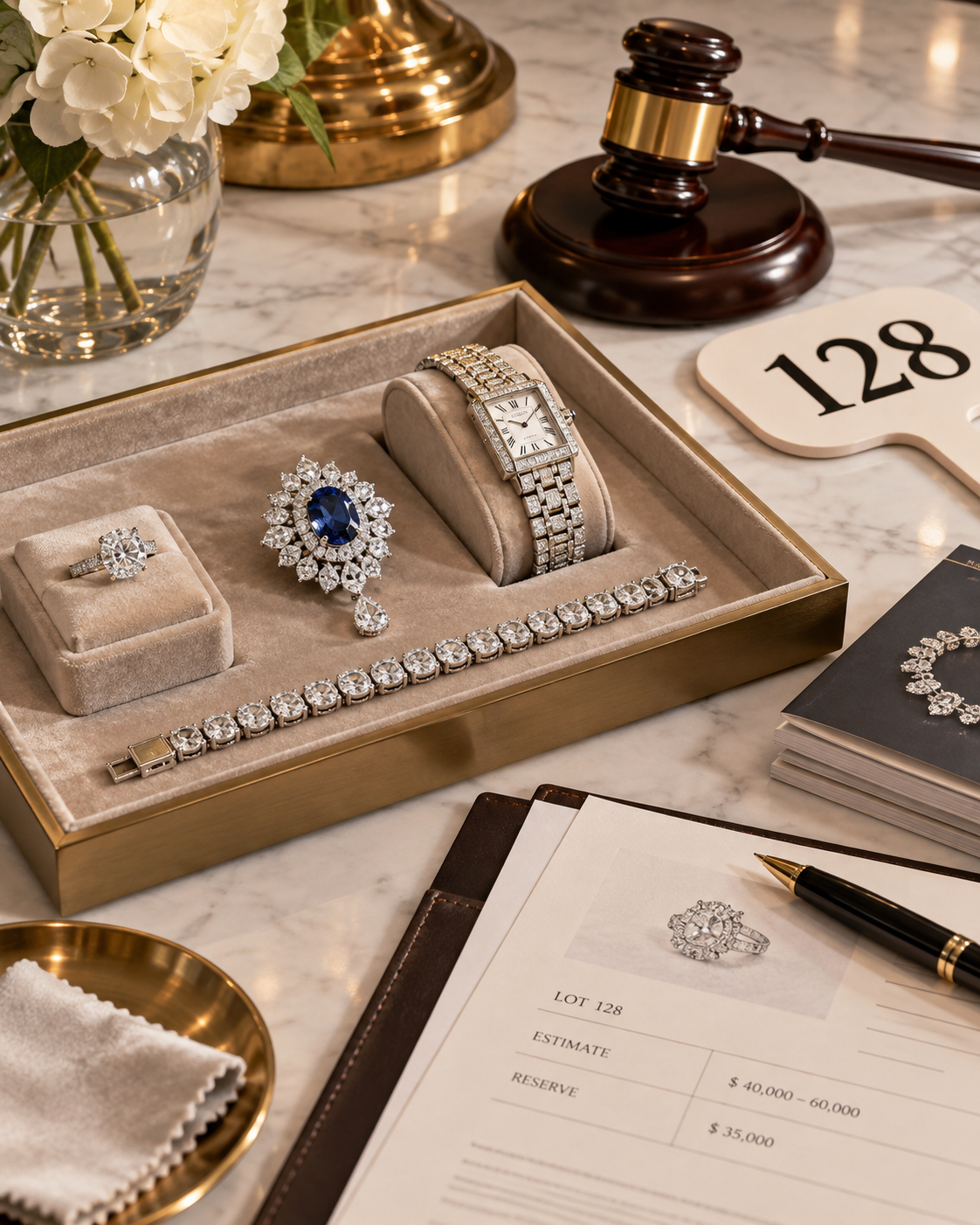
Some auction consignments use a reserve: the minimum price below which the item will not be sold.
Christie's defines a reserve as the minimum price the seller is willing to accept and notes that if bidding does not reach the required level, the lot does not sell.
This protects against a sale below the agreed threshold, but it does not guarantee a transaction.
Christie's defines a reserve as the minimum price the seller is willing to accept and notes that if bidding does not reach the required level, the lot does not sell.
This protects against a sale below the agreed threshold, but it does not guarantee a transaction.
When comparing auction with a direct offer, do not compare:
hammer price vs. buyer offer
without understanding the contract.
Auction houses may charge seller commissions and other agreed expenses. Christie's specifically notes seller's commission and possible additional charges, while Sotheby's states that seller payment is based on hammer price less commission and agreed expenses.
Ask for an estimate of your net proceeds.
hammer price vs. buyer offer
without understanding the contract.
Auction houses may charge seller commissions and other agreed expenses. Christie's specifically notes seller's commission and possible additional charges, while Sotheby's states that seller payment is based on hammer price less commission and agreed expenses.
Ask for an estimate of your net proceeds.
- Why is this item suitable for auction?
- What are the low and high estimates?
- Will there be a reserve?
- What seller commission applies?
- Are photography, insurance, shipping, cataloguing, or other expenses charged?
- What happens if the item does not sell?
- When is the next appropriate sale?
- When would I be paid after a successful auction?
For example, Sotheby's current public selling information states that payment on sold lots is generally sent within 45 days of the sale date, subject to receipt of the buyer's payment. That is a Sotheby's policy, not a universal auction timetable, and illustrates why sellers should verify the actual contract rather than assume immediate payment.
When Auction Can Make Sense
Reserve Price
Auction Price Is Not the Same as Seller Proceeds
Questions to Ask an Auction House
Option 4: Jewelry Consignment
Consignment sits between a direct sale and selling the item yourself.
You keep ownership while a dealer, jeweler, or platform markets the jewelry on your behalf. If it sells, the consignor receives the amount specified by the agreement after the applicable commission or fees.
You keep ownership while a dealer, jeweler, or platform markets the jewelry on your behalf. If it sells, the consignor receives the amount specified by the agreement after the applicable commission or fees.
The dealer is looking for an eventual end buyer rather than purchasing the jewelry immediately into inventory.
That can create the possibility of selling closer to a retail or collector-facing level.
But the key word is possibility.
There may be:
Current 2026 competitor material from Diamond Banc and Reliable Gold reflects the same structural trade-off: consignment can provide more potential upside on suitable pieces, but outright sale provides a known amount and faster completion.
That can create the possibility of selling closer to a retail or collector-facing level.
But the key word is possibility.
There may be:
- no guaranteed sale;
- no guaranteed timeline;
- commission;
- price reductions over time;
- conditions governing withdrawal;
- return or insurance terms.
Current 2026 competitor material from Diamond Banc and Reliable Gold reflects the same structural trade-off: consignment can provide more potential upside on suitable pieces, but outright sale provides a known amount and faster completion.
Consignment may suit:
It is less attractive when the seller needs a known amount by a specific date.
- recognizable designer jewelry;
- attractive vintage pieces;
- jewelry with strong retail presentation;
- items for which you are comfortable waiting;
- sellers who prioritize potential upside over immediate certainty.
It is less attractive when the seller needs a known amount by a specific date.
Why Consignment Can Be Attractive
When Consignment Can Make Sense
Get the terms in writing and ask:
- What asking price will be used?
- Can the price be reduced without my approval?
- What percentage or commission will I receive/pay?
- Are there other fees?
- How long is the consignment period?
- Can I withdraw the piece?
- Who insures it while it is in the dealer's possession?
- Who is responsible for loss or damage?
- When do I receive payment after a sale?
- What happens if the item never sells?
Questions to Ask Before Consigning
Option 5: Selling Jewelry Yourself Through a Marketplace
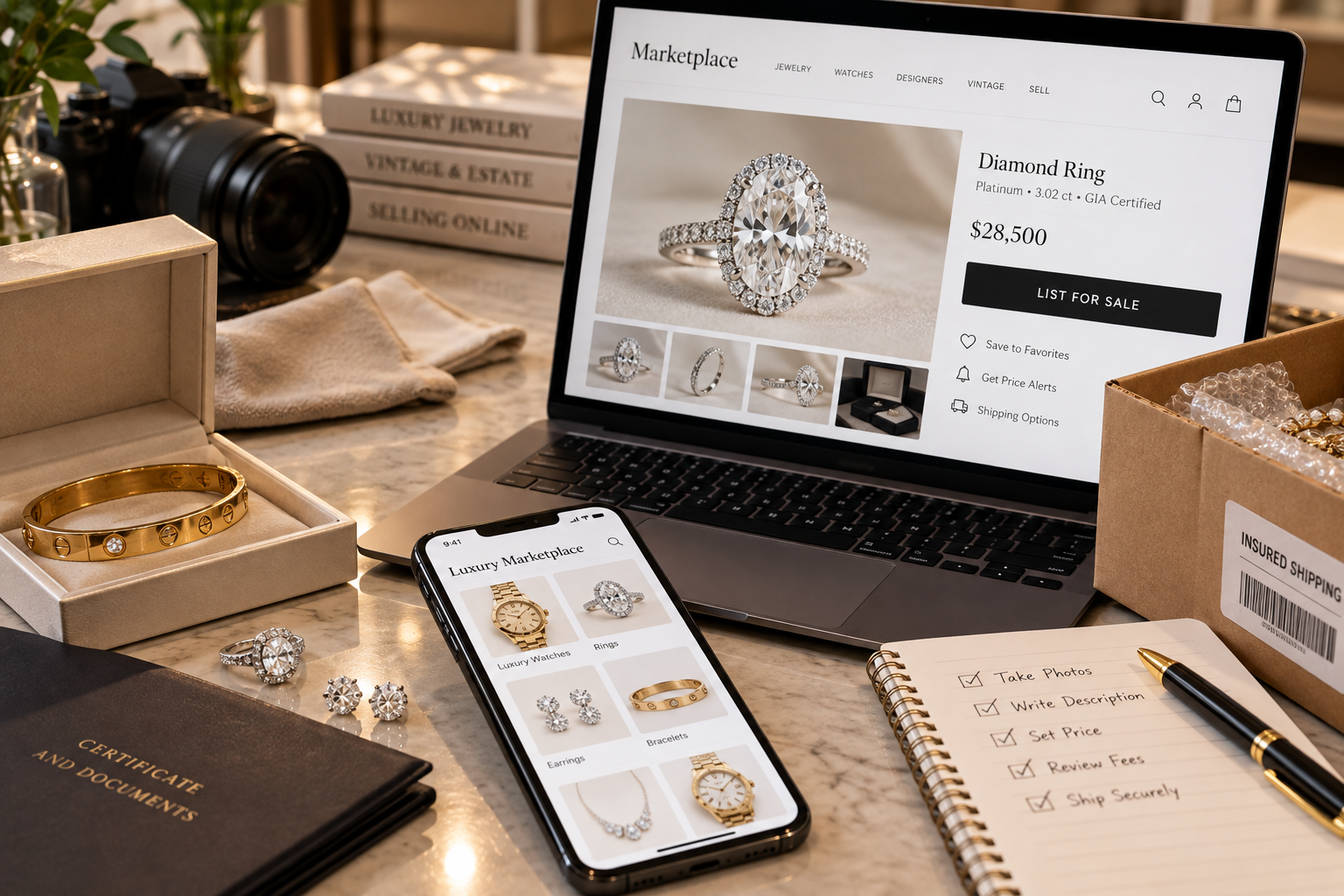
A marketplace can give you the greatest control over the asking price.
It also transfers much of the work normally performed by a professional buyer, auction house, or consignor back to you.
You may need to handle:
It also transfers much of the work normally performed by a professional buyer, auction house, or consignor back to you.
You may need to handle:
- identification;
- authentication documentation;
- photography;
- descriptions;
- pricing;
- customer questions;
- negotiation;
- payment;
- shipping;
- insurance;
- returns;
- disputes.
A private or peer-to-peer marketplace may suit a seller who:
It can also make sense for pieces with active enthusiast communities where buyers know exactly what they are looking for.
- already understands the item;
- knows how to price it;
- is comfortable creating a strong listing;
- can manage buyer communication;
- is willing to wait;
- understands shipping and payment risk.
It can also make sense for pieces with active enthusiast communities where buyers know exactly what they are looking for.
The seller has more control, but also more responsibility.
The FTC warns people selling items online about fake payment notices, overpayment scams, fake checks, and verification-code scams. It recommends understanding the platform's protections and being cautious about payment and communication outside the platform.
For expensive jewelry, safety considerations become more important because the financial consequence of a fraudulent transaction, chargeback, lost package, or disputed authenticity can be substantial.
The FTC warns people selling items online about fake payment notices, overpayment scams, fake checks, and verification-code scams. It recommends understanding the platform's protections and being cautious about payment and communication outside the platform.
For expensive jewelry, safety considerations become more important because the financial consequence of a fraudulent transaction, chargeback, lost package, or disputed authenticity can be substantial.
When a Marketplace Can Make Sense
The Safety Trade-Off
Which Selling Option Fits Which Type of Jewelry?
The item itself should influence the channel.
Plain gold jewelry
Specialist gold/jewelry buyer, reputable local buyer, pawn shop
Purity, weight, and market price are major value drivers
Significant natural diamond
Diamond specialist, managed auction where appropriate
Accurate diamond identification and current diamond-market demand matter
Designer jewelry
Designer-jewelry specialist, specialist consignment, auction for exceptional pieces
Brand, collection, authenticity, condition, and secondary demand matter
Luxury watch
Watch specialist; auction/consignment for rare collector pieces
Reference, configuration, originality, condition, and collector demand are highly specific
High-end estate jewelry
Estate-jewelry specialist; auction for rare or important pieces
Maker, period, provenance, stones, craftsmanship, and collectability may matter
Exceptional antique / signed jewel
Specialist auction house, appropriate dealer, specialist buyer
Collector exposure may become more important than immediate liquidity
Lower-value item you understand well
Marketplace, local buyer
Seller may reasonably handle more of the transaction personally
Plain gold jewelry
Specialist gold/jewelry buyer, reputable local buyer, pawn shop
Purity, weight, and market price are major value drivers
Significant natural diamond
Diamond specialist, managed auction where appropriate
Accurate diamond identification and current diamond-market demand matter
Designer jewelry
Designer-jewelry specialist, specialist consignment, auction for exceptional pieces
Brand, collection, authenticity, condition, and secondary demand matter
Luxury watch
Watch specialist; auction/consignment for rare collector pieces
Reference, configuration, originality, condition, and collector demand are highly specific
High-end estate jewelry
Estate-jewelry specialist; auction for rare or important pieces
Maker, period, provenance, stones, craftsmanship, and collectability may matter
Exceptional antique / signed jewel
Specialist auction house, appropriate dealer, specialist buyer
Collector exposure may become more important than immediate liquidity
Lower-value item you understand well
Marketplace, local buyer
Seller may reasonably handle more of the transaction personally
This comparison deliberately does not declare a winner.
A rare signed Art Deco jewel and a broken 14K chain should not be forced through the same selling model.
A rare signed Art Deco jewel and a broken 14K chain should not be forced through the same selling model.
Why a Specialist Buyer Is Especially Relevant for Certain Items
A specialist direct buyer becomes particularly logical when accurate identification and speed both matter.
Rolex, Patek Philippe, Audemars Piguet, or other luxury watch can require reference-level evaluation.
Value may depend on:
Value may depend on:
- reference;
- dial and configuration;
- originality;
- condition;
- bracelet and links;
- box and papers;
- service history;
- current secondary-market demand.
A large or valuable diamond may require attention to:
- natural or laboratory-grown origin;
- carat;
- cut;
- color;
- clarity;
- shape;
- fluorescence;
- grading documentation;
- current demand.
Luxury Watches
Significant Diamonds
For authenticated signed jewelry, the brand and exact collection may create value beyond metal and stones.
Cartier, Tiffany & Co., Van Cleef & Arpels, Bulgari, Graff, and other houses can have recognizable secondary markets.
That makes brand-specific knowledge especially relevant.
Cartier, Tiffany & Co., Van Cleef & Arpels, Bulgari, Graff, and other houses can have recognizable secondary markets.
That makes brand-specific knowledge especially relevant.
Designer Jewelry
Estate jewelry can combine:
- precious metals;
- significant gemstones;
- maker signatures;
- period craftsmanship;
- rarity;
- provenance;
- collector demand.
For high-value and mixed collections, it is useful to understand how Luxe Brokers evaluates different categories rather than treating every item as one generic lot.
If a direct specialist sale fits your priorities, you can learn how to sell your jewelry to a specialist buyer with Luxe Brokers.
If a direct specialist sale fits your priorities, you can learn how to sell your jewelry to a specialist buyer with Luxe Brokers.
High-End Estate Jewelry
Direct Sale vs. Consignment: The Most Important Trade-Off
For many high-value jewelry owners, the real decision is not pawn shop vs. jewelry buyer.
It is:
certainty now vs. potential upside later.
It is:
certainty now vs. potential upside later.
You receive a defined offer.
If you accept:
If you accept:
- the sale is completed;
- the amount is known;
- the buyer assumes future resale risk;
- you do not wait for an end customer.
You retain ownership until a buyer appears.
Potential benefits:
Neither structure is inherently superior.
If your priority is certainty, direct sale has an advantage.
If your priority is testing the market for a higher possible outcome and you can wait, consignment may deserve consideration.
Potential benefits:
- exposure closer to a retail audience;
- possible higher gross selling price.
- no guaranteed sale;
- commission;
- uncertain timeline;
- possible repricing;
- payment only after successful sale.
Neither structure is inherently superior.
If your priority is certainty, direct sale has an advantage.
If your priority is testing the market for a higher possible outcome and you can wait, consignment may deserve consideration.
Direct Sale
Consignment
Jewelry Buyer vs. Pawn Shop
This comparison should also be based on your actual goal.
- you intend to sell permanently;
- the piece requires category-specific knowledge;
- you want an item-specific direct offer;
- you value speed without managing a sale yourself;
- you want an explanation of the factors behind the offer.
Consider a Specialist Jewelry Buyer When:
Consider a Pawn Shop When:
- immediate local access is especially important;
- you have a straightforward item;
- the shop has appropriate expertise;
- or, importantly, you want a loan secured by the item rather than a permanent sale.
The last point makes pawn shops genuinely different from most specialist buyers.
A seller who wants to part with the jewelry and a borrower who wants to retrieve it later are not solving the same problem.
A seller who wants to part with the jewelry and a borrower who wants to retrieve it later are not solving the same problem.
Auction vs. Jewelry Buyer
Auction may deserve serious consideration when a piece is rare enough that competition among collectors is part of the value proposition.
A direct buyer may be more appropriate when:
Auction may be more appropriate when:
A major auction is not automatically a higher-price strategy.
The relevant number is what you net after fees and expenses if the lot sells, compared with the direct alternatives available to you.
A direct buyer may be more appropriate when:
- comparable market data is readily available;
- speed matters;
- the seller wants a certain offer;
- the item is valuable but not unusually rare.
Auction may be more appropriate when:
- scarcity is exceptional;
- provenance is important;
- multiple collectors may compete;
- the seller accepts uncertainty and time;
- the likely collector audience is broader than one dealer's normal buying network.
A major auction is not automatically a higher-price strategy.
The relevant number is what you net after fees and expenses if the lot sells, compared with the direct alternatives available to you.
How to Sell Jewelry Safely
Safety is part of value.
A slightly higher theoretical number is less attractive if the transaction introduces excessive custody, payment, shipping, identity, or fraud risk.
A slightly higher theoretical number is less attractive if the transaction introduces excessive custody, payment, shipping, identity, or fraud risk.
Document:
For a high-value item, keep copies of everything.
- full-item photographs;
- hallmarks;
- designer signatures;
- serial or reference numbers where applicable;
- certificates;
- grading reports;
- boxes and papers;
- existing condition.
For a high-value item, keep copies of everything.
Ask whether you are entering:
Do not compare the numbers until you understand the transaction.
- an outright sale;
- a pawn loan;
- a consignment;
- an auction consignment;
- a marketplace listing.
Do not compare the numbers until you understand the transaction.
If the jewelry leaves your possession, understand:
- when custody transfers;
- whether the item is insured;
- the insured amount or terms;
- who is responsible if it is lost or damaged;
- how it will be returned if you decline.
Ask:
What do I actually receive after all seller-side charges?
For auction or consignment, this can be more useful than the advertised sale price.
What do I actually receive after all seller-side charges?
For auction or consignment, this can be more useful than the advertised sale price.
The FTC specifically warns online sellers about fake payments, bogus refund requests, overpayment checks, and verification-code scams. Keep communication and payment within the protections of the chosen platform where appropriate and understand its seller-protection rules before shipping an expensive piece.
Before Giving Anyone the Jewelry
Verify What Transaction You Are Entering
Ask Who Has Custody and Who Has Insurance
Compare Net Amounts
Protect Yourself on Marketplaces
Questions to Ask Before Choosing Where to Sell
Before committing to any route, answer these questions:
Know whether the main value comes from:
- gold or platinum;
- gemstones;
- diamond quality;
- designer brand;
- watch reference;
- age or provenance;
- collector demand.
If yes, eliminate selling channels whose economics depend on waiting for an end customer.
What exactly do I own?
Do I need money quickly?
This is often the deciding factor between direct sale and auction/consignment.
Is a guaranteed amount more important than possible upside?
Never compare a gross auction or consignment number with a net cash offer without adjusting for fees and expenses.
What will I net after fees?
A reputable business can still be the wrong specialist for a particular asset.
Who is actually qualified to evaluate the item?
Confirm timing and payment method before committing.
How will I be paid?
You should understand:
- return process;
- shipping;
- insurance;
- storage;
- withdrawal fees;
- custody.
What happens if I say no?
The Bottom Line
The best place to sell jewelry depends on the item and the outcome you want.
Choose a specialist direct buyer when category expertise, speed, privacy, and a known offer are important.
Consider a pawn shop when you need immediate local access or specifically want a loan against the item rather than a permanent sale.
Consider auction when an unusual, rare, or highly collectible piece may benefit from competitive bidding.
Consider consignment when you can wait and want exposure to an end buyer while accepting commission and uncertainty.
Consider a marketplace when you understand the item and are comfortable taking responsibility for pricing, listing, buyer communication, payment, shipping, and disputes.
Before choosing among them, identify what you own and compare each option on the same basis:
net proceeds, timing, certainty, expertise, privacy, risk, and effort.
That framework is more useful than looking for one selling channel that is supposedly best for every piece of jewelry.
Choose a specialist direct buyer when category expertise, speed, privacy, and a known offer are important.
Consider a pawn shop when you need immediate local access or specifically want a loan against the item rather than a permanent sale.
Consider auction when an unusual, rare, or highly collectible piece may benefit from competitive bidding.
Consider consignment when you can wait and want exposure to an end buyer while accepting commission and uncertainty.
Consider a marketplace when you understand the item and are comfortable taking responsibility for pricing, listing, buyer communication, payment, shipping, and disputes.
Before choosing among them, identify what you own and compare each option on the same basis:
net proceeds, timing, certainty, expertise, privacy, risk, and effort.
That framework is more useful than looking for one selling channel that is supposedly best for every piece of jewelry.
Want a Number to Compare With Your Other Selling Options?
Before deciding between a direct buyer, pawn shop, auction, or consignment, it can help to have an item-specific estimate based on what you actually own.
Send clear photos of your jewelry, including any hallmarks, designer signatures, diamonds or gemstones, certificates, grading reports, and original box or papers you have. Luxe Brokers can review the information and provide a preliminary market-based estimate so you have another reference point before deciding how you want to sell.
Send clear photos of your jewelry, including any hallmarks, designer signatures, diamonds or gemstones, certificates, grading reports, and original box or papers you have. Luxe Brokers can review the information and provide a preliminary market-based estimate so you have another reference point before deciding how you want to sell.
Frequently Asked Questions
It depends on your goal and the item. A specialist buyer may be more appropriate for diamonds, designer jewelry, estate pieces, or luxury watches that need category-specific evaluation. A pawn shop can be convenient for an immediate local transaction and is also relevant if you want a loan rather than a permanent sale.
Many pawn shops do both. An outright purchase permanently transfers ownership, while a pawn loan uses the item as collateral and gives you a right to redeem it under the agreement's terms.
Consignment can provide more potential upside because the item is marketed to an end buyer, but the sale and timeline are not guaranteed and commission may apply. An outright sale provides a known offer and faster completion.
Auction may be worth considering for rare, exceptional, historically important, or highly collectible pieces that could attract competing bidders. Ask about the reserve, seller fees, expenses, unsold-item terms, and expected payment timeline before consigning.
Document the item, use a reputable business or platform, understand custody and insurance, get all material terms in writing, verify how payment works, and understand what happens if you decline or the item does not sell.
Not always. A formal appraisal can be useful for insurance, estate, tax, or other defined purposes, but a seller mainly needs an accurate understanding of the item and its current resale market. An insurance appraisal should not automatically be treated as an expected selling price.
It can be for sellers who understand their item and are comfortable handling pricing, listings, buyers, payment, shipping, and disputes. For expensive jewelry, the additional effort and fraud risk should be considered alongside the possible price advantage.